Dormant Seeding on Cape Cod: Is November Too Late to Seed a Lawn?
By Nikola Popov, agronomist and founder of Sofkin Landscaping in Hyannis, MA
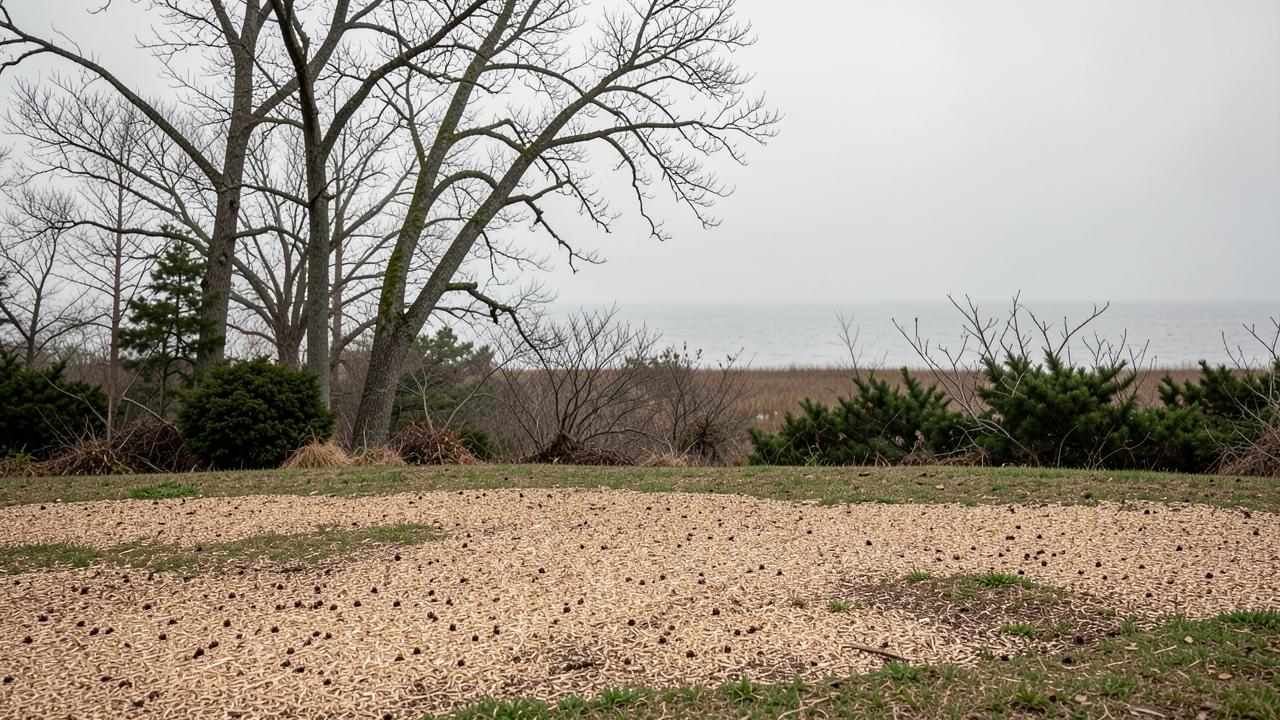
Yes, November is too late for a normal lawn seeding on Cape Cod. Seed that sprouts now won't be mature enough to survive the winter. You can still use dormant seeding, though. You spread seed once the soil is too cold for it to germinate, it sits in the ground over winter, and it sprouts on its own when the soil warms in spring. On our coast that usually means waiting until late November or December, once the soil stays in the low 40s °F.
It isn't a replacement for a late-summer seeding, and it won't fix every lawn. It works well for thin areas, bare patches and seasonal homes where nobody is around to water new seed. Below we cover when to do it, which grasses handle it best, how to prepare the ground, and what to do in March and April so the seed actually takes.
How dormant seeding works, and why timing matters more than anything
Cool-season grass seed needs warm, moist soil to germinate. UMass Extension describes dormant seeding as seeding after soil temperatures fall below the germination range, roughly 40-45 °F. Their late-season guidance says to wait until air temperatures are consistently below 50 °F and soil is in the low 40s or below. It also says it is better to err on the side of too late than too early.
Seeding too early is the most common mistake. If you spread seed during a mild week, some of it germinates, and those tender seedlings die at the first hard freeze. You lose that seed and still have bare soil. Seed that stays dormant has a very different winter. Freeze-thaw cycles open small cracks in the soil surface, and the seed settles into them. In spring it germinates as early as conditions allow, often before you could have gotten onto the lawn to seed it yourself.
Cape Cod adds a local twist. The water around us keeps fall soil warmer for longer than it stays inland, so a date that works in Worcester may be too early here. Go by soil temperature, not the calendar. A soil thermometer from a garden center, pushed about 2 inches deep and read in the morning for several days in a row, tells you more than any rule of thumb.
What the research says about results
Dormant seeding is a gamble, and the extension services say so plainly. UMass notes it may or may not work as well as an early-spring seeding and recommends it for filling thin or bare areas, not as the default way to start a new lawn.
A recent trial reported by Kansas State University, run in Kansas and Indiana, is useful because it compared seeding dates. Seed spread in December reached 84-99% cover by June for tall fescue, the fine fescues and perennial ryegrass, while Kentucky bluegrass reached 53%. Seeding in mid-November gave worse results for the slower grasses because some seed germinated too early: strong creeping red fescue reached 63% and Kentucky bluegrass only 24%. March seeding was the weakest for the fine fescues and bluegrass, at 33-63%.
Their climate isn't ours, so treat the numbers as a direction rather than a promise. The pattern still holds: true dormant seeding in December did better than both an early-November start and a late-March start. That matches what UMass advises: wait for cold soil, and don't rush.
Which grass seed to use on Cape Cod
Use the same grasses you would choose for a fall seeding here. On our sandy, acidic, fast-draining soils, that usually means fine fescues (creeping red, Chewings, hard fescue) for sun-and-shade lawns and low-input areas, and turf-type tall fescue where the lawn gets more foot traffic. We explain the trade-offs in our guide to the best grass types for Cape Cod lawns.
Some general advice says dormant seeding favors Kentucky bluegrass because it is slow to germinate. That's true in heavier inland soils. On Cape sand without irrigation, bluegrass struggles to survive the summer anyway, and it had the lowest cover in the trial above. Skip it unless your lawn already is bluegrass and has irrigation.
Whatever you buy, check the seed tag for the test date, the germination percentage and the weed seed content. Old or cheap seed is the wrong place to save money on a seeding that already carries extra risk.
- Sunny, irrigated lawn with kids or dogs: mostly turf-type tall fescue.
- Mixed sun and shade, little or no watering: a fine fescue blend.
- Seaside lawn exposed to salt spray: fine fescues, plus realistic expectations close to the water.
- Avoid annual ryegrass and bargain "contractor mix" bags.
How to dormant seed a lawn, step by step
Preparation does most of the work. The seed has to reach soil and stay there for three or four months of wind, rain and the occasional nor'easter.
- Clear the surface first. Remove leaves completely. A mat of oak leaves on top of seed blocks soil contact and smothers it. If your cleanup isn't finished, our fall cleanup checklist covers the order of work.
- Mow the existing grass short where you are overseeding, about 2 inches, so seed can fall through to the soil.
- Open up the soil. On bare patches, rake hard to loosen the top half inch. On thin turf, slice seeding gives the best protection, and UMass notes it gives the seed more protection. Core aeration earlier in the fall also leaves holes that catch seed, which is why aeration and overseeding go so well together (see our aeration guide).
- Wait for cold soil. Look for several morning readings in the low 40s °F and a forecast without a long warm spell.
- Spread more seed than usual. UMass suggests increasing the rate by about 50% for dormant seeding, and Kansas State used about 25% more. Use the normal rate on the label as your base. Spread half in one direction and half at a right angle for even coverage.
- Press it in. Lightly rake or drag a mat to work seed about 1/4 inch into the soil, then roll if you can. Seed sitting on top of loose sand is what blows away.
- Protect slopes and windy spots. Purdue warns that dormant seeding should be avoided on slopes prone to erosion. On a gentle grade, a light layer of clean straw or a straw erosion blanket helps. UMass advises against dark mulches, which warm the soil and can trigger early germination.
- Do not water or fertilize now. The seed should stay dormant until spring.
Why the fertilizer waits until spring
It's tempting to put starter fertilizer down with the seed. Don't. Dormant seed can't use nutrients for months, and on sandy Cape soil whatever you spread in late fall can wash through toward groundwater and the ponds and bays it feeds. Massachusetts rules for lawn fertilizer (330 CMR 31.05) prohibit applying plant nutrients to frozen, snow-covered or saturated soil, which describes much of a Cape winter. They also limit phosphorus to cases such as a soil test showing a need or establishing a new lawn. Several Cape towns have their own fertilizer rules on top of that, so check with your town before you buy.
Purdue recommends feeding shortly after the seedlings come up in spring, when they can actually use it. An organic, slow-release product is a good fit for that first feeding on sandy soil, because it releases nitrogen gradually instead of all at once.
What to do in spring so the seed takes
Dormant seeding saves you a spring trip to the hardware store, but the seedlings still need care. Expect the first green fuzz once the soil warms in early to mid spring. It's patchy at first, because different grasses wake up at different times.
- Keep the seedbed damp once it sprouts. Light, frequent watering is fine at first, then water less often but more deeply as roots grow. Sandy soil dries fast in April wind.
- Skip crabgrass preventer on the seeded areas. Most pre-emergent products stop grass seed from establishing as well as weeds. Read the label, and if in doubt, leave the new areas untreated this spring.
- Feed after germination, not before.
- Mow when the new grass reaches about 3 inches, taking off no more than a third of the blade, per UMass guidance.
- Have a backup plan. If an area is still thin by late April, seed it again. UMass treats a follow-up seeding as a normal part of the method, not a failure.
When dormant seeding is the wrong choice
Some lawns need a different plan. If more than about half the lawn is weeds or bare soil, it needs a full renovation in late summer, when soil prep, seed and watering can be done properly. If the area is a steep bank, a waterfront slope or anything near a wetland, erosion control and possibly conservation commission rules come first. Don't seed it and hope.
It's also the wrong tool if the lawn is thin for a reason seed won't fix: heavy shade under pitch pines, compacted soil along a driveway, grub damage or very low pH. Seeding over those problems usually ends with a thin lawn again by July. Find and fix the cause first, then seed.
For second-home owners who leave in the fall, dormant seeding fits well: nothing needs watering until you are back in spring. If you would like us to look at your lawn and tell you whether dormant seeding makes sense, our lawn care team can do it as part of a free estimate.
Frequently asked questions
What month should I dormant seed on Cape Cod?
Usually late November into December, once soil temperatures stay in the low 40s °F or below. The ocean keeps Cape soil warmer than inland Massachusetts, so check a soil thermometer rather than going by date. Seeding later is safer than seeding too early.
Can I spread grass seed on snow or frozen ground?
You can, and freeze-thaw cycles will work some of it into the soil, but results are less reliable. Seed lying on snow can wash off with the melt, especially on a slope. Raking and pressing seed into bare, unfrozen soil before the ground freezes gives better contact.
How much more seed do I need for dormant seeding?
UMass Extension suggests about 50% more than the normal label rate, because fewer seeds survive the winter. Kansas State used about 25% more in its trials. On loose Cape sand it makes sense to lean toward the higher end.
Will birds eat dormant grass seed?
Some, yes. Working the seed into the top quarter inch of soil and rolling it reduces losses, and a light layer of clean straw helps on bare patches. That is part of why the seeding rate is higher.
Is dormant seeding better than spring seeding?
Often, but not always. Dormant seed is already in place when the soil warms, so it gets a head start, and in the Kansas State trial December seeding beat late-March seeding for fine fescues. A warm spell in early winter or a dry, snowless winter can cut germination, so plan on touching up thin spots in spring.
Related services
More from the blog
 Wood Ash on Your Lawn: A Cape Cod Guide for Fireplace SeasonFireplace ash can help an acidic Cape Cod lawn, but only in small doses, on the right soil and away from acid-loving shrubs. Here is how to tell if yours qualifies.
 Snow Mold Prevention for Cape Cod Lawns: What to Do in NovemberSnow mold is set up in November, not March. Here is the short list of fall jobs that keep pink and gray snow mold out of a Cape Cod lawn, and what to do if patches show up anyway.
What Goes Into Weekly Lawn Mowing & MaintenanceA look at what a routine mowing and maintenance visit involves for Cape Cod properties.
Want this done on your property?
Free estimates for landscaping, lawn care, and tree work across Cape Cod.