Wood Ash on Your Lawn: A Cape Cod Guide for Fireplace Season
By Nikola Popov, agronomist and founder of Sofkin Landscaping in Hyannis, MA
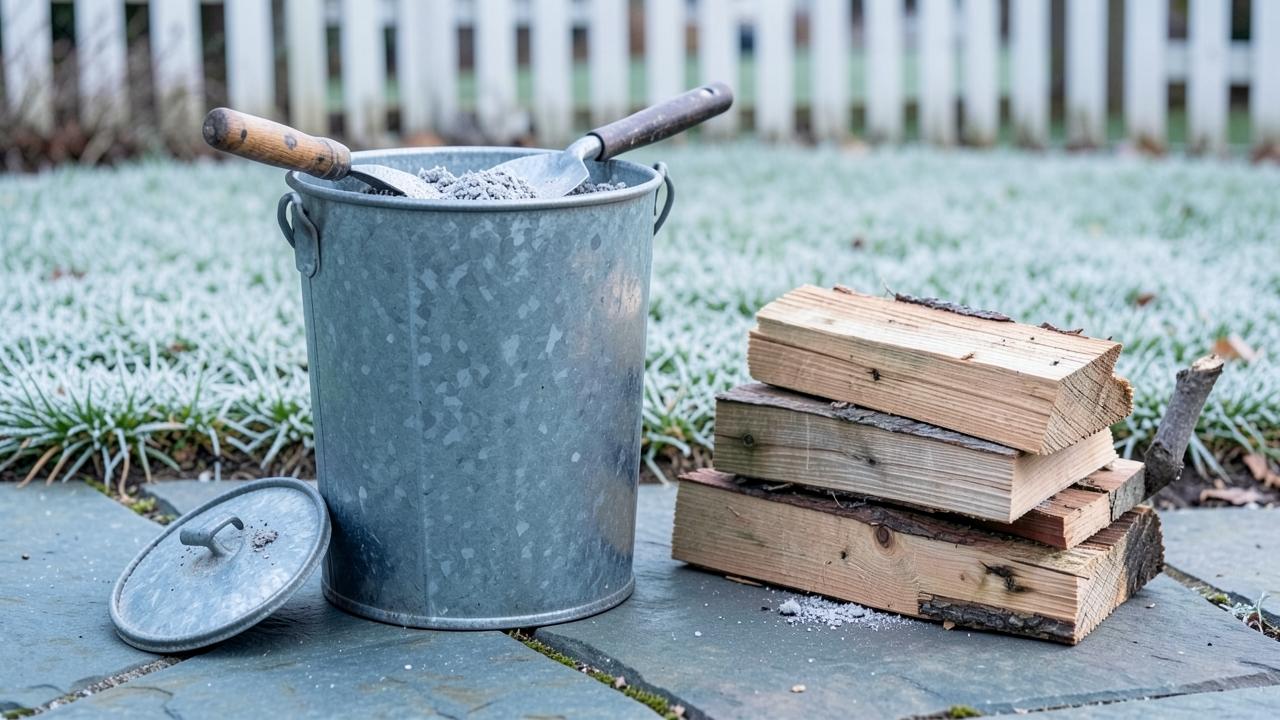
Yes, you can put wood ash on your lawn, and on many Cape Cod lawns it does some good, because our sandy soils tend to be acidic and ash works like a weak, fast-acting lime. The catch is the dose. University extension guidance puts the ceiling at about 15 to 20 pounds per 1,000 square feet per year, roughly one five-gallon bucket, and only on soil that a test shows is acidic. More than that, or ash on the wrong patch of ground, can push the pH too high and starve both grass and shrubs of nutrients.
Fireplace and wood stove season is when the ash piles up, so this is the right time to decide where it goes. Below is how ash actually behaves in Cape soil, how to work out whether your lawn needs it, how to spread it, and the beds and plants where it should never land.
What wood ash actually adds to soil
Think of ash as a liming material that happens to carry some potassium, not as a fertilizer. According to University of Wisconsin Extension, calcium is the main nutrient, at 20 percent or more of the ash, with potassium up to about 5 percent and magnesium, phosphorus and sulfur up to about 2 percent each. Iowa State Extension gives a rough analysis of 0-1-3. There is no nitrogen in it at all, so it will not green up a lawn the way a feeding does.
Its real effect is on pH. Ash neutralizes acid at roughly half the strength of ground limestone, so about four cups of ash do the work of one pound of aglime. It also reacts much faster than lime, because the particles are fine and dissolve readily. That speed is the reason to be careful: on sandy soil with little organic matter, a heavy dose can swing the pH up within weeks instead of nudging it over a season or two.
The exact mix depends on the wood and how hot it burned, so no two buckets are quite the same. Volume is smaller than people expect: a full cord of wood leaves only around 20 pounds of ash. A household that burns a cord or two a winter usually has more than enough for one lawn.
Does your Cape Cod lawn need it? Test before you spread
The UMass turf program considers a pH between 5.5 and 7.0 the most satisfactory range for most lawn grasses. It also notes that fine fescues, the grasses that do best in Cape conditions, tolerate acid soil down to about pH 5.1 to 5.5. In other words, a fine fescue lawn at pH 5.8 does not need ash, and adding it may simply favor annual bluegrass, which UMass notes can increase with continued liming. (Our guide to grass types for Cape Cod explains why fescues dominate here.)
Sandy soils also hold their pH poorly. They drift back toward acid faster than heavier inland soils, but they also overshoot faster when you add something alkaline. That is why guessing from a neighbor's results, or from a lawn that looks a bit thin, is not good enough.
Cape Cod Cooperative Extension runs basic pH tests for home lawns and gardens, and the UMass Soil and Plant Nutrient Testing Laboratory runs a full nutrient analysis that includes pH, potassium, calcium and lead. How to read the result for ash:
- Below about 5.5: ash can help, within the yearly limit, and a lime recommendation on the report tells you how far to go.
- About 5.5 to 6.5: a light dusting is tolerable on a lawn of cool-season grasses, but there is little to gain. Many fescue lawns are best left alone.
- 7.0 or higher: do not use ash anywhere on that soil. Find another way to get rid of it.
How much ash to spread, and how to do it
Stay at or under 20 pounds per 1,000 square feet per year, and lower if your soil is only mildly acidic. A five-gallon bucket of sifted ash weighs roughly that much. For a typical 5,000-square-foot Cape lawn, that means no more than about five buckets a year, spread evenly across the whole area, not dumped on the thin spots.
Iowa State and Wisconsin both suggest winter or early spring for spreading, with the soil moist so the dust settles in. On the Cape, the practical limit is the ground itself: state rules for plant nutrients prohibit applying them to frozen, snow-covered or saturated soil, and require setbacks from ponds, marshes and other surface water (330 CMR 31.05). Ash is not sold as fertilizer, but the reasoning applies just as well: meltwater carries it straight off frozen ground into the nearest wetland or kettle pond. Some Cape towns also have their own fertilizer bylaws, so check with yours if you live near the water.
Here is the routine we would suggest for a homeowner doing it themselves:
- Wait until the ash is completely cold, then sift out charcoal chunks, nails from pallets and any half-burned pieces.
- Pick a calm, dry day when the ground is thawed and slightly damp. Ash is fine and blows easily, especially near the shore.
- Wear gloves, long sleeves, eye protection and a dust mask. Wet ash is caustic and irritates skin, eyes and lungs.
- Spread with a drop spreader or by hand in thin passes, the way you would spread lime. You should still see grass blades, not a grey film.
- Keep a strip of at least 20 feet between broadcast ash and any pond, marsh or stream.
- Note the date and amount. Next year's soil test will tell you whether to keep going or stop.
Where ash does harm: plants and places to skip
Many of the plants Cape homeowners love are acid lovers, and ash is bad news for them. Wisconsin Extension lists blueberries, azaleas and rhododendrons, birch, red maple and pin oak among the plants that wood ash can damage, often through chlorosis (yellow leaves with green veins) as iron becomes harder to absorb. Mountain laurel and the other heath-family shrubs common in Cape yards sit in the same group. Keep ash out of their beds and off the lawn right at their drip line.
Bigleaf hydrangeas are a special case. Their blue color depends on acidic soil, and raising the pH around them tends to push the flowers toward pink. If you have worked to keep blue mopheads blue, do not let ash drift into that bed. Our post on hydrangeas in fall covers what they do need this time of year.
Skip ash in these situations too:
- Newly seeded areas. The salts in ash can hinder germination, so keep it off any patch you have dormant seeded this fall or plan to seed in spring.
- Potato and vegetable beds unless a test calls for lime. Higher pH increases potato scab, and most vegetables prefer slightly acidic soil.
- Next to nitrogen fertilizer. Never mix ash with urea or ammonium-based fertilizers. The combination releases ammonia gas and wastes the nitrogen, so never apply them together.
- Piles on bare ground. A heap of ash left in one corner of the yard can sterilize that spot and leach into groundwater, which matters on a sole-source aquifer like the Cape's.
What not to put in the bucket
Only ash from clean, untreated firewood belongs on a lawn. Ash from painted or pressure-treated lumber, old decking, driftwood soaked in salt, plywood, cardboard, wrapping paper with glossy inks, or anything burned with trash can carry metals and chemicals into your soil. Extension guidance also warns against ash from bonfires and pellet stoves, since you rarely know exactly what went into them. Even clean wood ash can contain traces of lead and cadmium; at the recommended rate the amounts are low, and the routine UMass test includes lead if you want to keep an eye on it.
Charcoal briquette ash from the grill is another no. Briquettes often contain binders and additives that do not belong in a lawn.
Storage matters as well. Ash that sits out in the rain loses much of its potassium and liming power, and it cakes into lumps that will not spread. Keep it dry in a covered metal can until you are ready to use it.
Fire safety first: ash stays hot for days
Before ash goes anywhere near a garden, it has to be safe. The Massachusetts Department of Fire Services advises letting ashes cool, shoveling them into a metal bucket with a tight lid, and setting that bucket outside, well away from the house, deck and garage. Its guidance specifically warns against paper bags and cardboard boxes, and against dumping ashes in the yard or in the trash while they could still be warm. Embers buried in a pile of ash can stay hot long after the fire looks dead.
On the Cape this matters more than people expect. Dry oak leaves, pine needles and shingle siding are all good fuel, and a windy day turns one live coal into a brush fire. A dedicated lidded metal can that sits on a stone or gravel pad, not on the deck, solves both the safety and the storage question.
A better plan for most Cape Cod yards
For a lot of homeowners the honest answer is to use a little ash and dispose of the rest. If the soil test says your lawn is acidic and low in potassium, a bucket or two per 1,000 square feet is a fine way to recycle it. If the test says the pH is already in range, put the ash in a small dose in the compost (Iowa State suggests no more than about 5 percent of the pile by volume) or bag it cold with household trash.
Ash also does not replace a real feeding program. It brings no nitrogen, its potassium washes through sandy soil quickly, and it can push pH past the sweet spot without warning. A soil-test-based organic fertilization plan, timed to the season and to the state's rules, does the job ash cannot. If you would rather have someone read the soil report and set the lime, potassium and feeding rates for you, our fertilization service is built around exactly that, and you can request a free estimate for your property.
Frequently asked questions
Is wood ash good for grass?
It can be, on acidic soil that also needs potassium. Ash raises pH and adds calcium and some potassium, but no nitrogen. On a fine fescue lawn that already tests around pH 5.5 to 6.5, it adds little and can do harm if overused.
How much wood ash per square foot of lawn?
Extension guidance caps it at about 15 to 20 pounds per 1,000 square feet per year, which works out to roughly 0.02 pounds per square foot, or one five-gallon bucket per 1,000 square feet. Use less if your soil is only slightly acidic, and none if it tests at pH 7.0 or higher.
Can I spread wood ash on snow?
It is better not to. Massachusetts rules bar applying plant nutrients to frozen or snow-covered soil, because meltwater carries them off. Store the ash dry in a lidded metal can and spread it on thawed, damp ground in late winter or early spring.
Is wood ash better than lime?
Not better, just different. Ash works faster but has only about half the neutralizing power of ground limestone, and its strength varies from batch to batch. Lime is more predictable when a soil test calls for a specific amount.
Can I use ash from my fire pit or pellet stove?
Only if you know it came from clean, untreated wood. Fire pits often get trash, painted scraps or treated lumber, and extension guidance advises against using pellet stove and bonfire ash on soil.
Related services
More from the blog
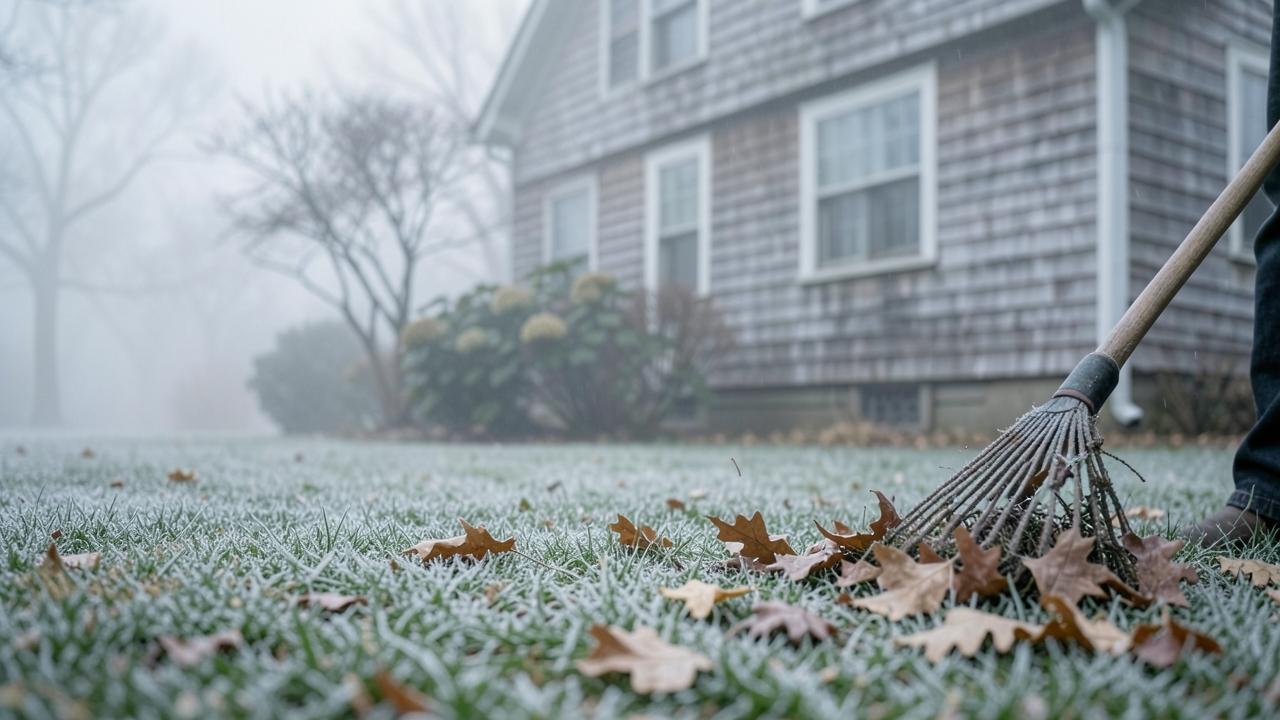 Snow Mold Prevention for Cape Cod Lawns: What to Do in NovemberSnow mold is set up in November, not March. Here is the short list of fall jobs that keep pink and gray snow mold out of a Cape Cod lawn, and what to do if patches show up anyway.
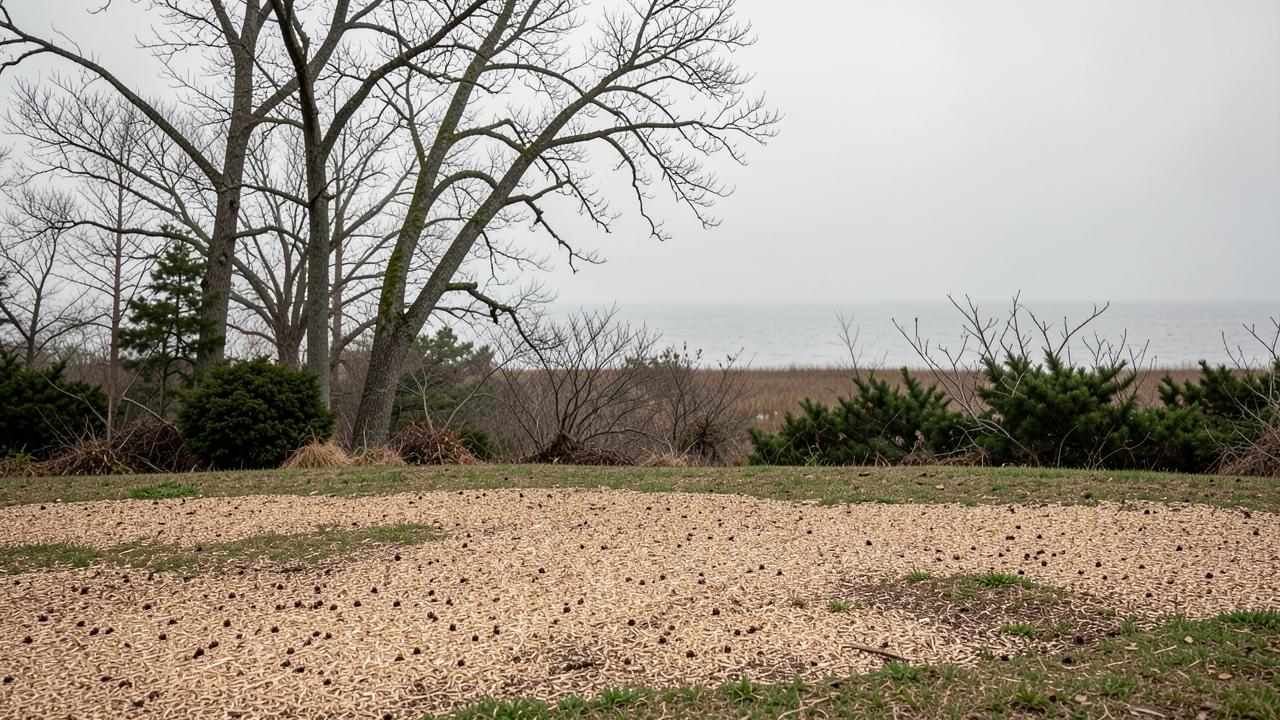 Dormant Seeding on Cape Cod: Is November Too Late to Seed a Lawn?November is too late for a normal seeding on Cape Cod, but not for dormant seeding. Here is when to do it, which seed to use and how to keep it from washing or blowing away.
What Goes Into Weekly Lawn Mowing & MaintenanceA look at what a routine mowing and maintenance visit involves for Cape Cod properties.
Want this done on your property?
Free estimates for landscaping, lawn care, and tree work across Cape Cod.