Ice Melt Damage to Lawns and Shrubs: A Cape Cod Winter Guide
By Nikola Popov, agronomist and founder of Sofkin Landscaping in Hyannis, MA
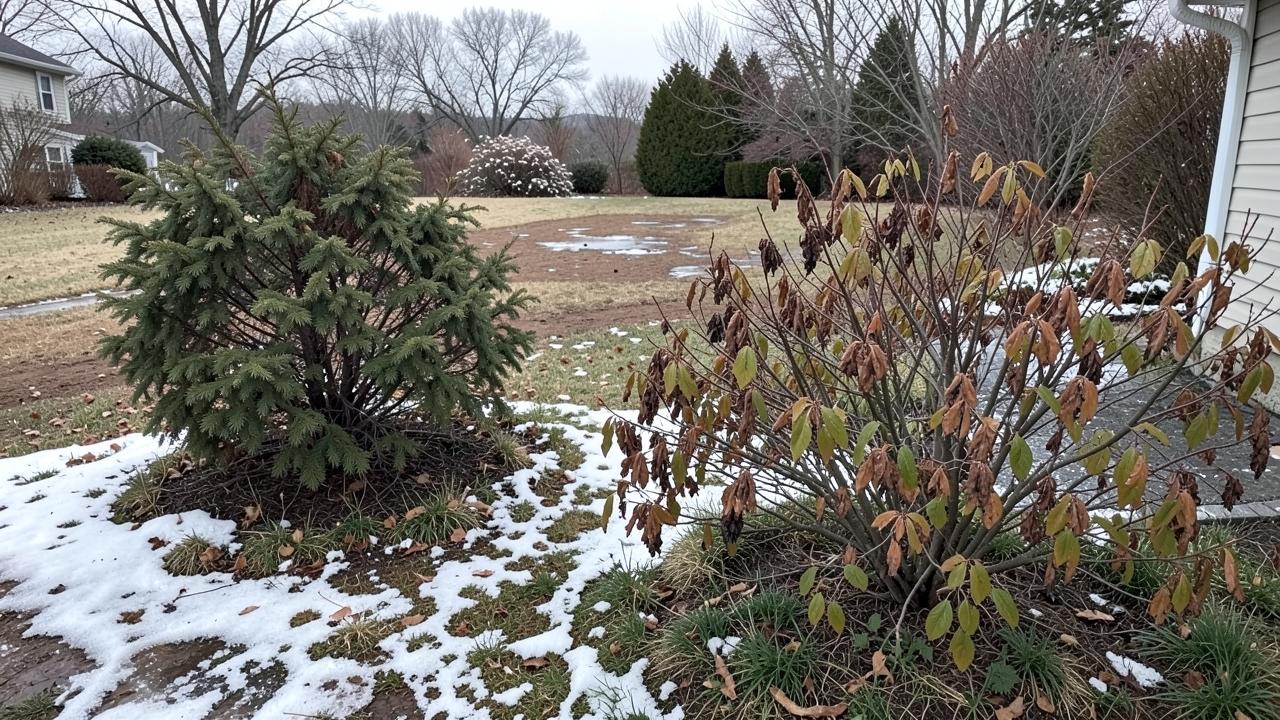
Ice melt damages lawns and shrubs in three ways: salty slush gets plowed or shoveled onto them, meltwater carries dissolved salt into the root zone, and splashes coat buds and needles. You can prevent most of it this winter. Clear snow before you salt, use far less product than most people do, keep salty snow off planting beds, and choose a deicer that suits the actual pavement temperature. If the damage has already happened, it can usually be repaired in spring, as long as you flush the salt out before you reseed or replant.
Cape Cod properties face a double dose. Shrubs near the water already deal with salt spray off the ocean, and the bed beside the driveway gets rock salt on top of that. Many homes here sit empty for part of the winter while a caretaker or snow contractor treats the walks, so the problem often goes unnoticed until April. This guide covers what to tell whoever handles your snow, which plants to watch, and how to repair the damage.
How deicing salt hurts grass and shrubs
According to UMass Extension, salt reaches plants by three routes, and each one shows up differently:
The timing matters. Salt put down in late winter does more harm than salt from December, because it has less time to wash out before roots start growing in spring. Illinois Extension recommends going especially light after March 1, when plants begin to break dormancy.
- Spray and splash. Salty water thrown from tires or a snowblower dries on buds, stems and needles. It burns tissue and dries out bud scales, so flowers and new leaves can die before they open. On evergreens this shows as needles browning from the tips, mostly on the side facing the drive or street.
- Salt in the soil. Meltwater carries sodium and chloride into the root zone. Salty soil holds on to its water, so roots go thirsty even when the ground is moist. Chloride that builds up in leaves causes scorched margins, yellowing and twig dieback.
- Damaged soil structure. Sodium breaks down soil structure, which leads to compaction and poor drainage. This is the slow kind of damage: plants may not decline until a hot, dry summer, sometimes years later.
Which ice melt is safest for plants (and when each one works)
No deicer is truly plant-safe. The useful question is which one does the job at the temperature you actually get, so you can use as little as possible. The lowest practical pavement temperatures below come from the Minnesota Pollution Control Agency's deicer overview. The temperature that counts is the pavement, not the air, and the numbers printed on bags are often lab figures that look better than real-world results.
On milder Cape Cod mornings, when the pavement is in the 20s or warmer, plain rock salt works, and the plant risk comes mainly from how much gets spread and where the slush ends up, not from the product. If you want a lower-sodium option for steps right next to foundation plantings, calcium or magnesium chloride lets you use less product on cold mornings. Whatever you buy, read the label and follow the rate.
- Sodium chloride (rock salt): works down to about 15°F. It is the cheapest and the hardest on plants and soil, and it corrodes metal.
- Calcium chloride: works down to about -20°F. It costs more but is effective in real cold, and it contains no sodium.
- Magnesium chloride: works down to about -10°F. It is sodium-free, but still a chloride salt.
- Calcium magnesium acetate (CMA): works only down to about 20°F. It is gentler on plants and metal but expensive, and it struggles in a real cold snap.
- Potassium chloride blends: often sold as lawn-friendly, but they perform at about the same temperature as rock salt or worse, so people tend to over-apply them.
- Sand: melts nothing, but it gives traction with no salt at all. Mixing it with salt lets you cut the salt sharply.
How much ice melt to use: less than you think
Most salt damage along driveways comes from spreading too much, not from the product. Illinois Extension puts it plainly: about 12 ounces of salt, roughly one coffee mug, treats a 20-foot driveway or about 10 sidewalk squares. Spread it so the grains sit about 3 inches apart. White crust left on the pavement after the ice is gone is wasted salt that will end up in your lawn.
Practical steps that make the biggest difference:
- Shovel or blow first, salt second. Salt is for the thin layer that is left, not for melting a foot of snow.
- Salt only where people walk and where it is steep: steps, the slope of the driveway, the path to the door. A flat gravel or shell driveway rarely needs salt at all.
- Use a hand spreader or a cup, never a bucket tossed by the handful.
- Sweep up leftover salt once the pavement is dry, and reuse it for the next storm.
- Pile snow where the melt drains away from beds, not on top of the hydrangeas or the boxwood beside the steps.
- Brief your caretaker or plow contractor in writing. Tell them which steps and walks to treat, which product to use, and where snow can and cannot be piled. On a seasonal home, this one conversation prevents most of the damage.
Protecting shrubs and lawn edges before the first storm
A few things are worth doing in November and early December, before the ground freezes:
UMass Extension also points out that salt-tolerant does not mean injury-free. Even rugosa rose or juniper next to a heavily salted driveway can look rough by March. If you are already planning spring plantings, our native plants guide covers species that cope with Cape Cod's sandy soil and coastal exposure.
- Burlap screens on stakes, a few inches away from shrubs on the street or driveway side, stop spray and plow splash. Do not wrap tightly against the foliage. Our fall cleanup checklist covers wrapping for wind and winter burn, which is a separate problem.
- A gravel or stone edge between the pavement and the lawn gives slush somewhere to land other than turf. It is a small hardscaping job that also makes mowing cleaner.
- Look at which plants sit in the splash zone. UMass Extension lists common boxwood, eastern white pine, eastern hemlock, red maple, serviceberry, red twig dogwood and viburnum among the salt-sensitive plants. All of them are common in Cape Cod yards. Among the tolerant ones it lists juniper, rugosa rose, sumac, mugo pine, northern red oak and Colorado spruce.
- Water evergreens deeply before the ground freezes if the fall has been dry. A well-watered plant handles winter salt and wind better than a drought-stressed one.
How to spot salt damage in late winter and spring
Salt damage often hides until spring, and it gets mistaken for winter kill, disease or grubs. Signs that point to salt:
If you are unsure, a soil test settles it. The UMass Soil and Plant Nutrient Testing Laboratory can check soluble salts, and it costs far less than replacing a hedge.
- Damage runs in a band along the driveway, walk or street, usually the first foot or two of lawn, and stops sharply where the salt stopped.
- Evergreens are brown on the pavement side and green on the other side.
- Deciduous shrubs leaf out late, have few flowers, or put out tufts of small twigs (witches' brooms) where buds died.
- The grass in that strip does not green up in April while the rest of the lawn does.
Repairing salt-damaged lawn and shrubs in spring
The order matters: flush first, then repair. New seed will not establish in salty soil.
- Leach the salt out. Once the ground thaws, give the damaged strip several slow, deep soakings rather than light sprinkles. Spring rain helps. Cape Cod's sandy soil is an advantage here: UMass Extension notes that leaching works well in well-drained soil and poorly where drainage is bad.
- Do not count on gypsum. It is often sold as a salt fix, but Wisconsin Extension notes it only helps where the soil drains well. On our sandy soils, water does most of the work anyway. Adding compost does more for the soil over time.
- Rake out dead turf and reseed once the soil warms in mid to late spring. Use a mix suited to the Cape. Our guide to the best grass types for Cape Cod explains why fine fescues usually beat bargain blends here. Keep the seed bed moist until it fills in.
- Wait before you remove shrubs. Hose salt off foliage in late winter, then give damaged shrubs until late spring. Scratch a twig with a fingernail: green underneath means it is alive. Prune out dead tips once new growth shows where the live wood starts.
- Replace with tolerant plants only where the damage keeps coming back. If the boxwood by the front steps browns every spring, the spot is telling you something.
Planning ahead for next winter
If the same strip burns every year, fix the layout rather than the symptoms. That can mean a wider stone border along the driveway, moving salt-sensitive shrubs away from the steps, or replanting the edge with tougher species. A healthy, thick lawn with good roots also recovers from a salty winter much faster than a thin one, which is where regular lawn care pays off.
If you would like someone to look at last winter's damage or plan a salt-tolerant edge for the driveway, request a free estimate.
Frequently asked questions
Is pet-safe ice melt also safe for my lawn?
Not necessarily. "Pet-safe" labels are about paws and ingestion, not soil. Many of these products are still chloride salts, often with less sodium, and they will still burn grass if you over-apply them or shovel them onto the lawn. Use the same light rate and keep the slush off turf.
Will grass come back on its own after salt damage?
Light damage along a walk often recovers once spring rain flushes the salt out. If the strip is still brown by mid-May after a few deep waterings, rake it out and reseed. Grass that has been dead since March will not come back.
Can I use sand instead of salt?
Yes, for traction. Sand melts nothing, but on flat walks and gravel drives it is often all you need. Mixing sand with a small amount of salt is a good middle ground. Sweep it off hard surfaces in spring so it does not get tracked indoors or wash into beds.
Does ice melt damage pavers and stone patios?
It can, over time. Freeze-thaw cycles and heavy salting are hard on concrete pavers and on natural stone in particular. Use the minimum amount, shovel first, and rinse the surface in spring. Avoid chipping ice off pavers or stone with a metal tool, which scars the surface.
When does salt damage show up?
Spray burn on evergreens often shows in late winter. Damage to deciduous shrubs and lawn usually appears in spring, when they leaf out or fail to green up. Soil damage can take years to show as a general decline.
Related services
More from the blog
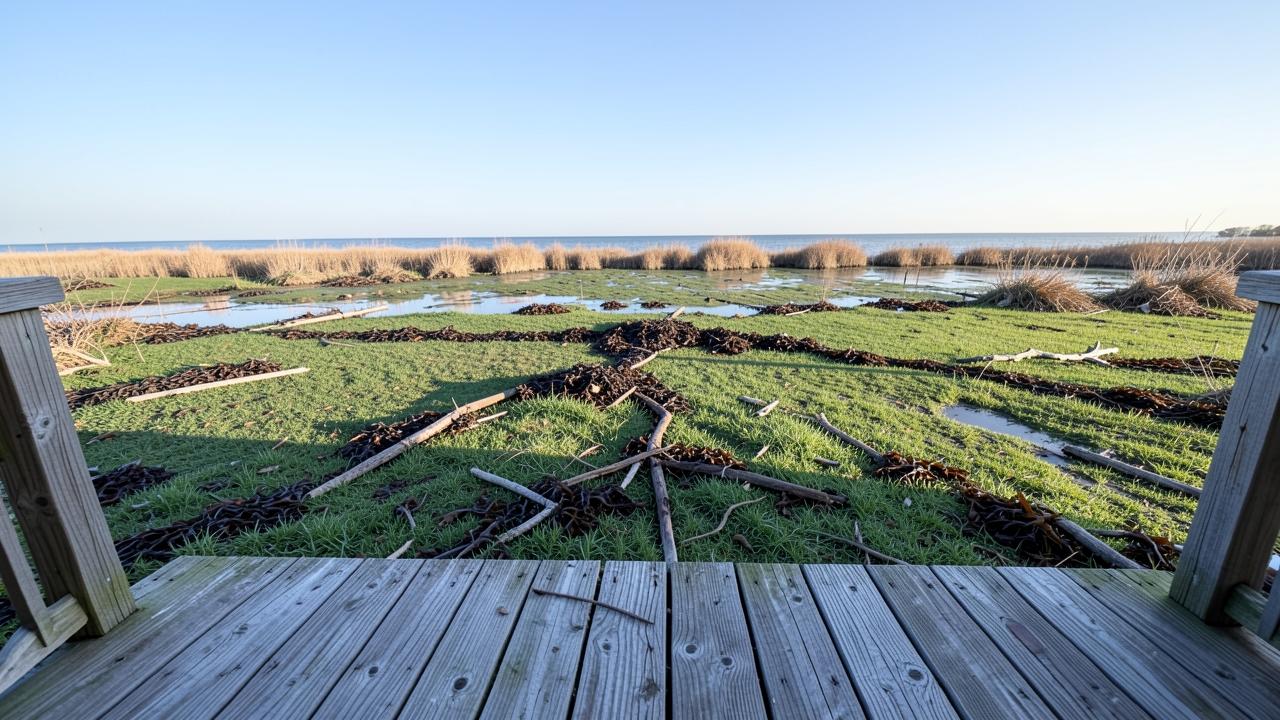 Saltwater Flooding on Your Lawn: Cape Cod Recovery After a Storm TideA storm tide over the lawn is not always a death sentence. Here is what to do in the first days, what to leave alone over winter, and how to judge the damage in spring.
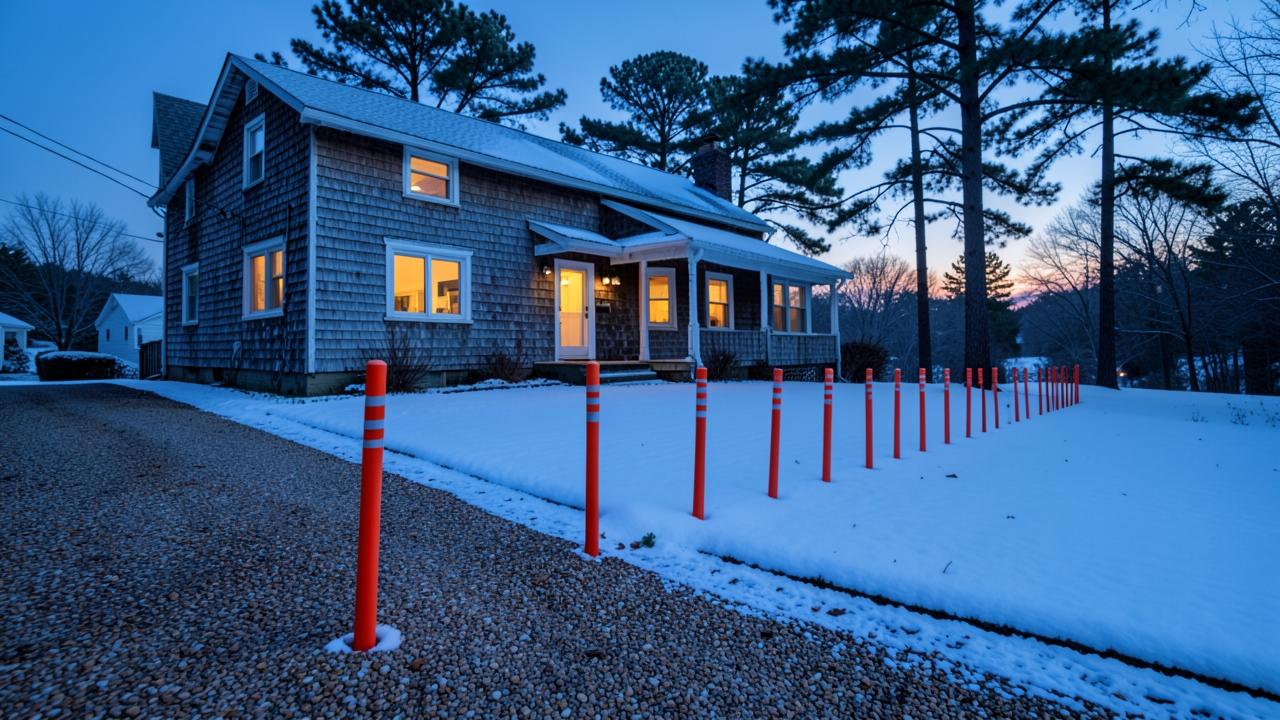 Snow Plow Damage to Lawns: Stake Your Cape Cod Yard Before It FreezesMost plow damage happens because the driver cannot see where the pavement ends. A couple of hours with snow stakes in late November prevents most of it.
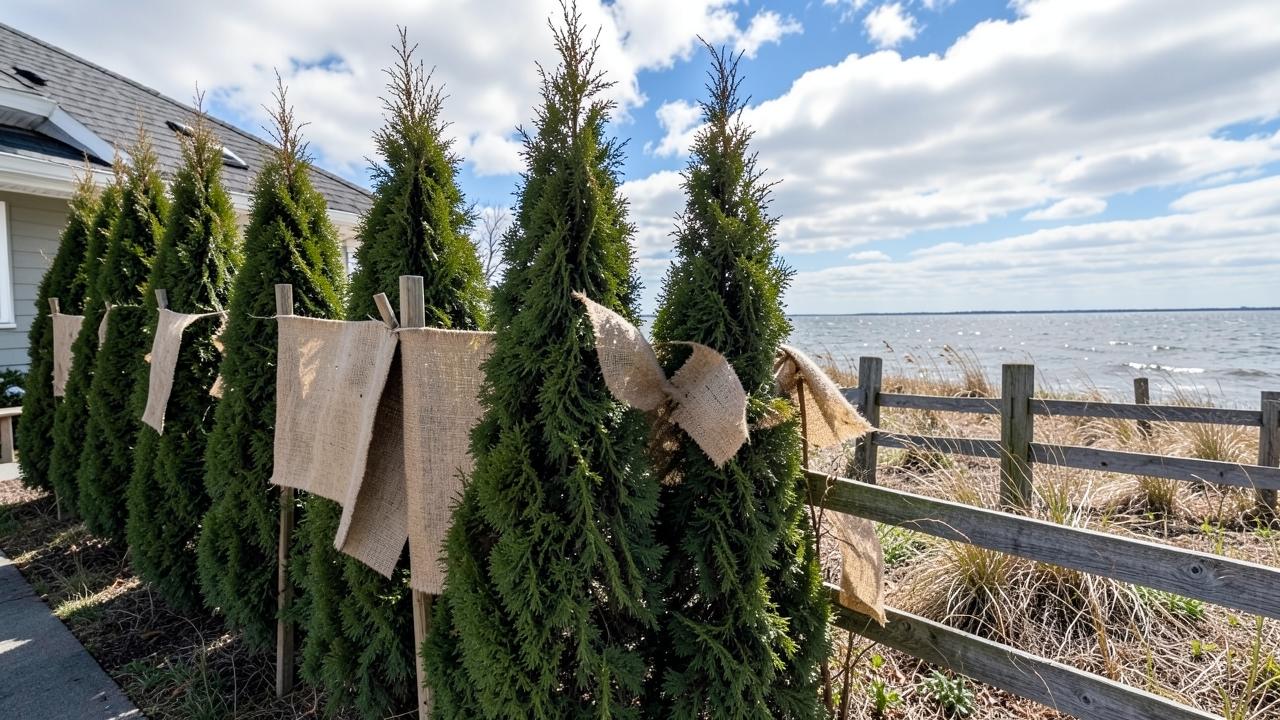 Winter Burn on Evergreens: How to Protect Them on Cape CodBrown arborvitae and boxwood in March usually start with dry soil and wind in November. Here is what to do now on Cape Cod, and what not to bother with.
Want this done on your property?
Free estimates for landscaping, lawn care, and tree work across Cape Cod.