Snow Plow Damage to Lawns: Stake Your Cape Cod Yard Before It Freezes
By Nikola Popov, agronomist and founder of Sofkin Landscaping in Hyannis, MA
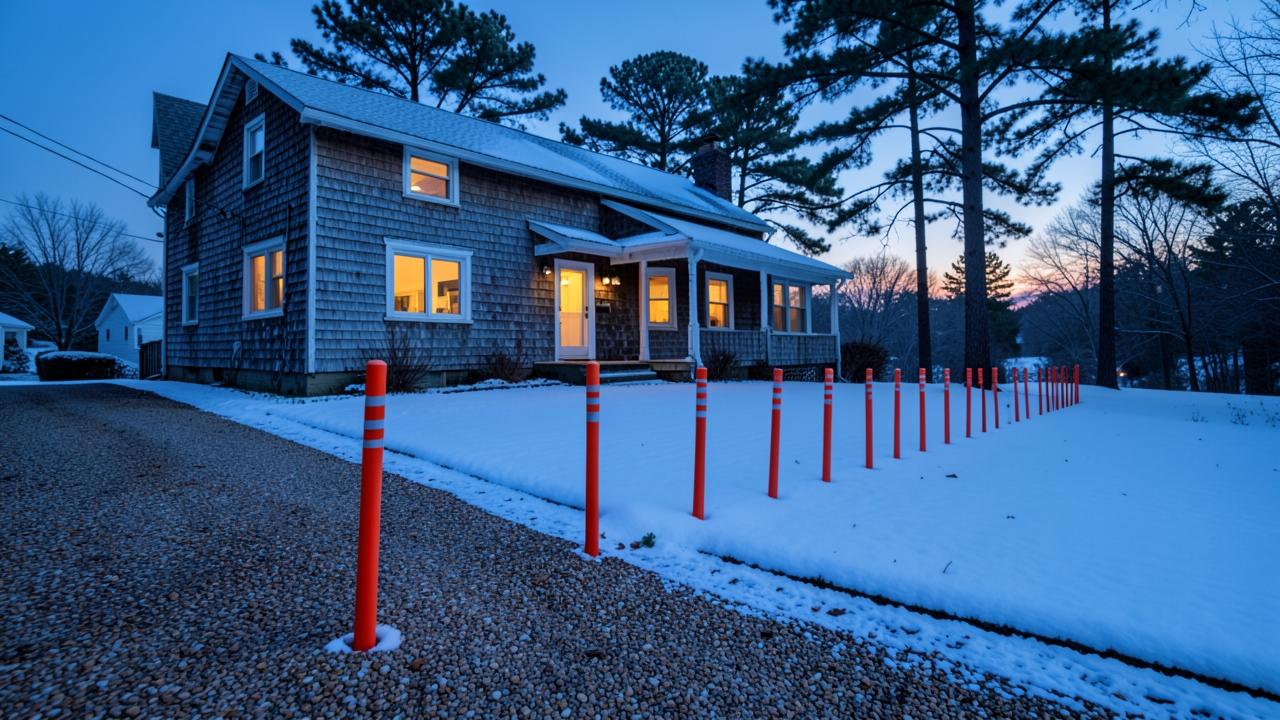
The best way to prevent snow plow damage to your lawn is to mark every edge the plow cannot see, with tall reflective stakes, before the ground freezes and before the first real storm. Plow blades tear turf, scrape gravel onto grass and snap sprinkler heads mostly because, under eight inches of snow, a lawn edge, a driveway and a flower bed all look the same. On Cape Cod's sandy soil you can still push a stake in by hand right now, and that window closes once the ground freezes.
Below is what to mark, how far apart, what to agree with whoever plows your driveway, how town plowing along the road works, and how to fix the damage in spring if it happens anyway.
What a plow actually does to a Cape Cod yard
Plow damage is rarely one big gouge. It is usually a series of small hits that only show up when the snow melts in March:
None of this is anyone being careless on purpose. A driver working at 4 a.m. in blowing snow is guessing where your driveway ends. Stakes take the guessing away.
- Peeled lawn edges. The blade rides a foot past the pavement and rolls the sod up like a carpet, often along the whole length of the driveway.
- Gravel and crushed shell on the grass. Many Cape driveways are pea stone or shell. A blade set too low scrapes the top layer into windrows on the lawn, where it smothers the grass and dulls mowers in May.
- Broken irrigation heads and lights. Sprinkler heads and path lights sit right at the edge, exactly where the blade and the snow pile land.
- Crushed shrubs and young trees. Heavy wet snow pushed into a bed at the end of a driveway can split boxwood, hydrangeas and small evergreens.
- Chipped cobblestone and curbing. A steel blade that catches a raised granite apron or edging can knock stones loose.
How to stake a driveway and lawn edges
Use driveway markers that will still stand out above a snowbank: 48-inch fiberglass or polyethylene stakes with a reflective band are the common choice. Fiberglass bends when a blade or a tire brushes it and springs back; thin wooden stakes snap. Orange or red reads better against snow than white or green.
Placement matters more than the stake itself:
- Set each stake just off the pavement, about 6 inches into the turf, so the driver stops at the stake line and not on top of your grass.
- On straight runs, one stake every 10 to 15 feet on each side is usually enough. On curves, at the corners where the driveway widens, and at the turnaround, tighten to every 4 to 6 feet. Curves are where most edges get torn.
- Mark the start of the driveway at the street on both sides; the mouth is where town and private plows overlap.
- Push stakes 8 to 10 inches deep. In our sandy soil that holds well, but a stake only 3 inches in will lean over in the first wet storm and point the driver the wrong way.
- If your driveway borders a slope, a wall or a drop to a bed, put the stakes on the safe side of the hazard, not on the edge itself.
Mark the things a stake line will not protect
Walk the property once with a handful of extra stakes and mark anything within about 3 feet of a plowed surface. These are the things that get hit most often:
If you have an irrigation system, the late-fall winterization visit is a good moment to note which heads sit right at the driveway edge. Heads that get hit every winter can often be moved back from the pavement when the system is started up in spring. Our irrigation service can look at that layout with you.
- Sprinkler heads along the driveway, walkway and road edge, one stake per head.
- Low path and driveway lights, and any exposed valve boxes or cleanouts.
- Granite cobblestone aprons, Belgian block edging and raised curbing. If you have a cobblestone driveway apron, mark both ends so the driver lifts the blade before it.
- Young trees and shrubs near the driveway, especially anything planted in the last two years.
- The spot where snow should go, so the pile does not end up on a bed or on the septic area access.
Agree on a plan with whoever plows your driveway
Stakes work best when the driver knows what they mean. Before the first storm, walk the driveway with your plow contractor, or send them a marked-up photo if you are away. Cover these points:
- Where snow goes. Pick one or two pile spots on the downhill side, away from shrubs, the house foundation and the lawn strip you care most about. Piles that sit on turf all winter are also where snow mold starts, because the grass stays covered and wet the longest.
- Blade height on gravel and shell. Ask whether the plow uses shoes or a raised cutting edge on stone driveways. Leaving a thin layer of packed snow keeps most of the stone on the driveway and off the lawn.
- Who fixes what. Ask in writing whether the contractor repairs turf, edging or sprinkler heads they hit, and how you should report it.
- Ice melt. If they also treat the driveway, agree on product and amount. Salt along a lawn edge causes its own kind of damage; see our ice melt guide.
- Before photos. Take dated photos of edges, aprons and plantings now. If something is damaged, a November photo settles the question quickly.
Town plows and the strip along the road
The grass between your property line and the road is usually part of the town's right-of-way, even if you mow it. Town plows have to push snow onto that strip, and policies on what they will repair differ from town to town.
Many Massachusetts towns repair lawn the plow actually tore up but do not cover items placed in the right-of-way. Wellesley's public works guidance, for example, asks residents to install stakes to guide plow operators, says the town is not responsible for items such as irrigation heads, shrubs and stone work in the right-of-way, and does lawn repairs from mid-April. Cape towns set their own rules: Sandwich, for instance, points residents to the right-of-way section of its winter maintenance policy and takes repair requests through its online 311 system.
Practical takeaways: check your town's public works page for its snow policy before the season starts, keep sprinkler heads and ornamental stones out of the road shoulder where you can, and report damage promptly with photos. And do not have snow pushed back across the road or into the street; it is a hazard, and many towns prohibit it.
Seasonal homes: set it up before you leave
If you close up a Cape house for the winter, nobody is there to point at the edge of the driveway in January. Get the stakes in before you go, leave a simple sketch with your plow contractor or caretaker showing where snow should be piled, and ask them to send a photo after the first big storm. A stake that has been knocked flat in December is useless for the rest of the winter, so one check-in is worth it.
It also helps to remove or tie back anything near the driveway that will not survive a snow pile: planters, decorative boulders that the blade can catch, and the garden hose reel.
Repairing plow damage in spring
Do not start the day the snow melts. Working on soggy turf leaves ruts and compacts the soil. Wait until the ground has thawed and dried enough to rake without smearing, which on the Cape is usually some time in April, then:
For minor scuffing along the edge, often only raking and a light overseed are needed; healthy turf fills in narrow strips by early summer. Larger torn sections can be resodded instead, which gives instant cover but needs daily water at first. If you would rather not deal with it, spring repair of plow-damaged edges fits naturally into a spring cleanup and maintenance visit. If you would like someone to walk your driveway edges and plantings before the storms start, you can ask us for a free estimate.
- Rake gravel, shell and sand off the lawn first. A leaf rake turned upside down or a stiff broom works; leaving stones in the grass ruins mower blades and smothers new seed.
- Roll back sod that is torn but intact. If the strip is still in one piece and green at the base, lay it back down, press it firmly into the soil and keep it moist. It often reroots.
- Fill gouges with screened loam or a loam and compost mix, level it with the surrounding lawn, and firm it lightly.
- Seed with the grass you already have. On most Cape lawns that means fine fescue or a fescue blend. The University of Minnesota turf program suggests about 4 to 5 lb of fine fescue seed per 1,000 sq ft for renovation, raked lightly in no deeper than 1/4 inch. For a 2-foot strip along a 60-foot driveway, that is roughly half a pound.
- Keep it damp until it grows. Light, frequent watering until seedlings are up, then less often and deeper.
- Check fertilizer rules first. Massachusetts restricts phosphorus on established lawns, and several Cape towns have their own fertilizer rules. Read the label and the local rules before you spread anything on a repair.
Frequently asked questions
When should I put driveway markers in on Cape Cod?
Late November to early December, before the first snow and before the ground freezes. Sandy Cape soil takes a stake easily until then; once it is frozen you may have to wait for a thaw or drill a pilot hole.
How tall should snow stakes be?
Most homeowners use 48-inch stakes, which leave plenty showing above typical Cape snowbanks after you push them 8 to 10 inches into the ground. Along the road, where town plows build higher banks, taller stakes are easier to see.
Will the town pay for lawn damage from its plows?
It depends on the town. Many Massachusetts towns repair turf their plows tore up in the right-of-way but do not cover items placed there, such as irrigation heads, stones or decorative mailboxes. Check your town's snow policy and report damage with photos.
Can plow-damaged grass grow back on its own?
Narrow scuffs where the roots are still in place usually fill in by early summer after raking. Sections where the sod was torn off or covered with gravel need to be cleaned up, filled with loam and reseeded or resodded.
Do I need to remove the stakes in spring?
Yes, pull them once the snow season is over, usually in April, before the first mowing. Stakes left in the lawn get hit by mowers and leave holes that fill with weeds.
Related services
More from the blog
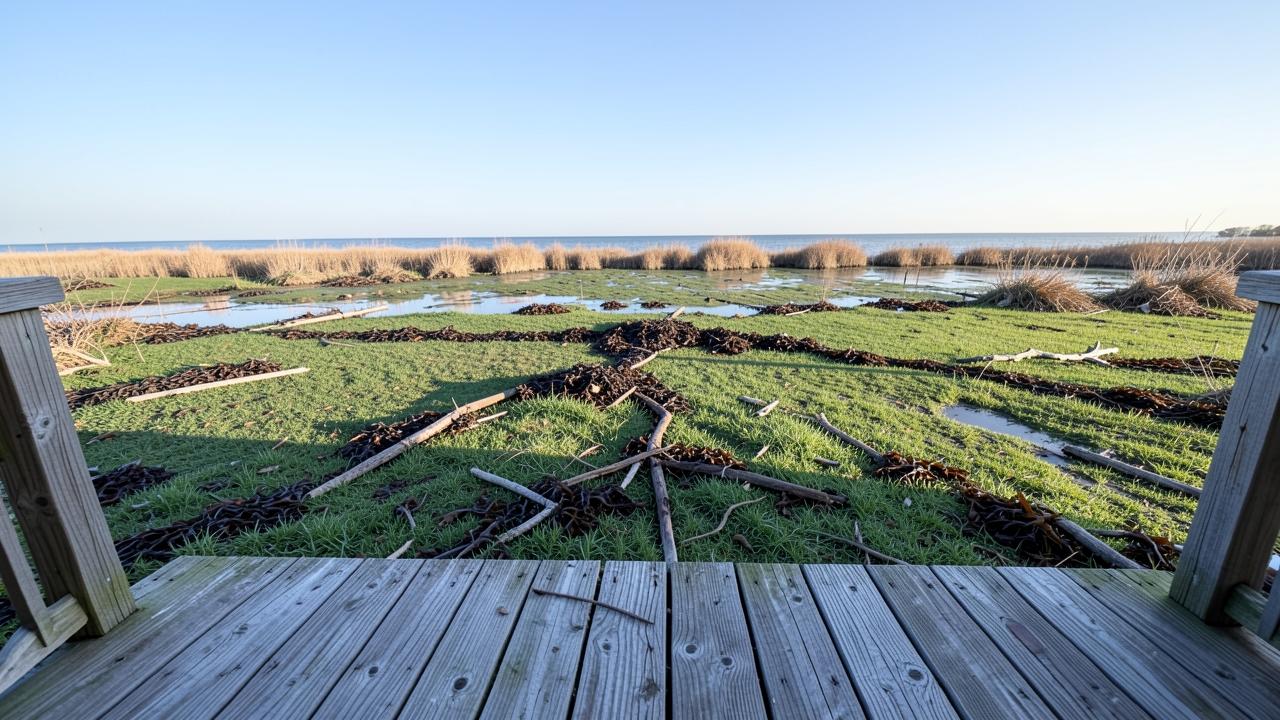 Saltwater Flooding on Your Lawn: Cape Cod Recovery After a Storm TideA storm tide over the lawn is not always a death sentence. Here is what to do in the first days, what to leave alone over winter, and how to judge the damage in spring.
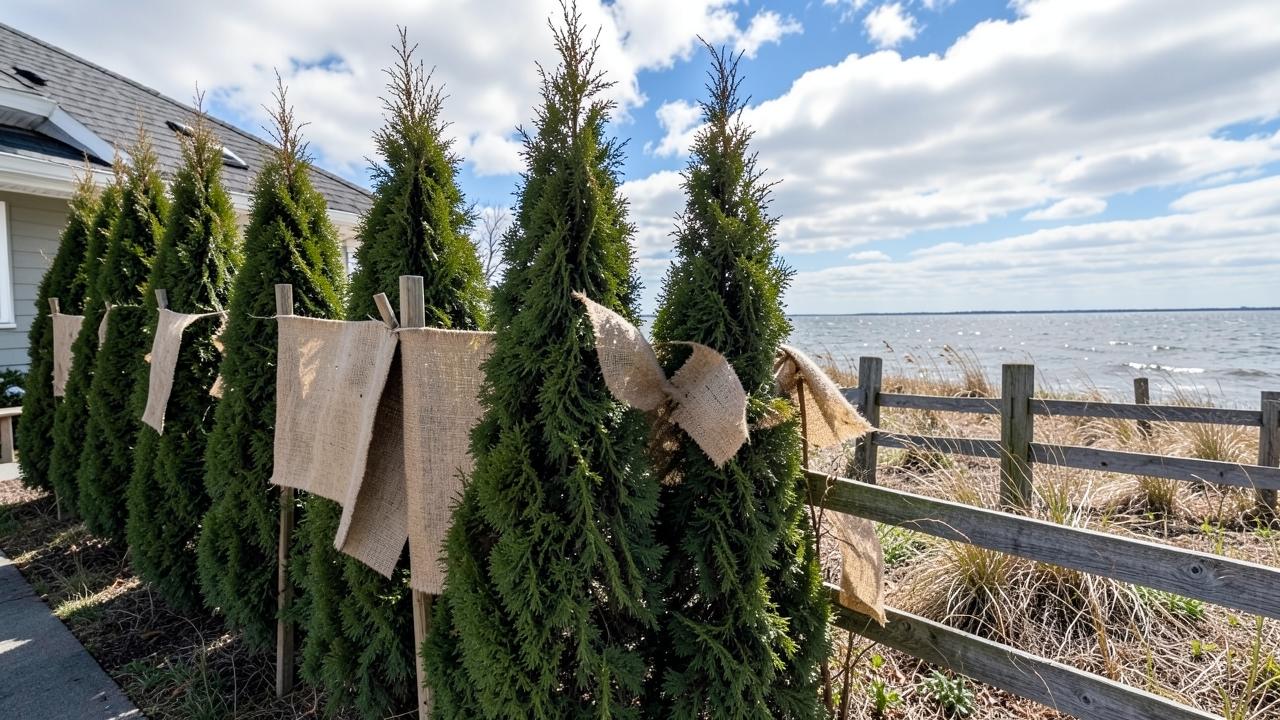 Winter Burn on Evergreens: How to Protect Them on Cape CodBrown arborvitae and boxwood in March usually start with dry soil and wind in November. Here is what to do now on Cape Cod, and what not to bother with.
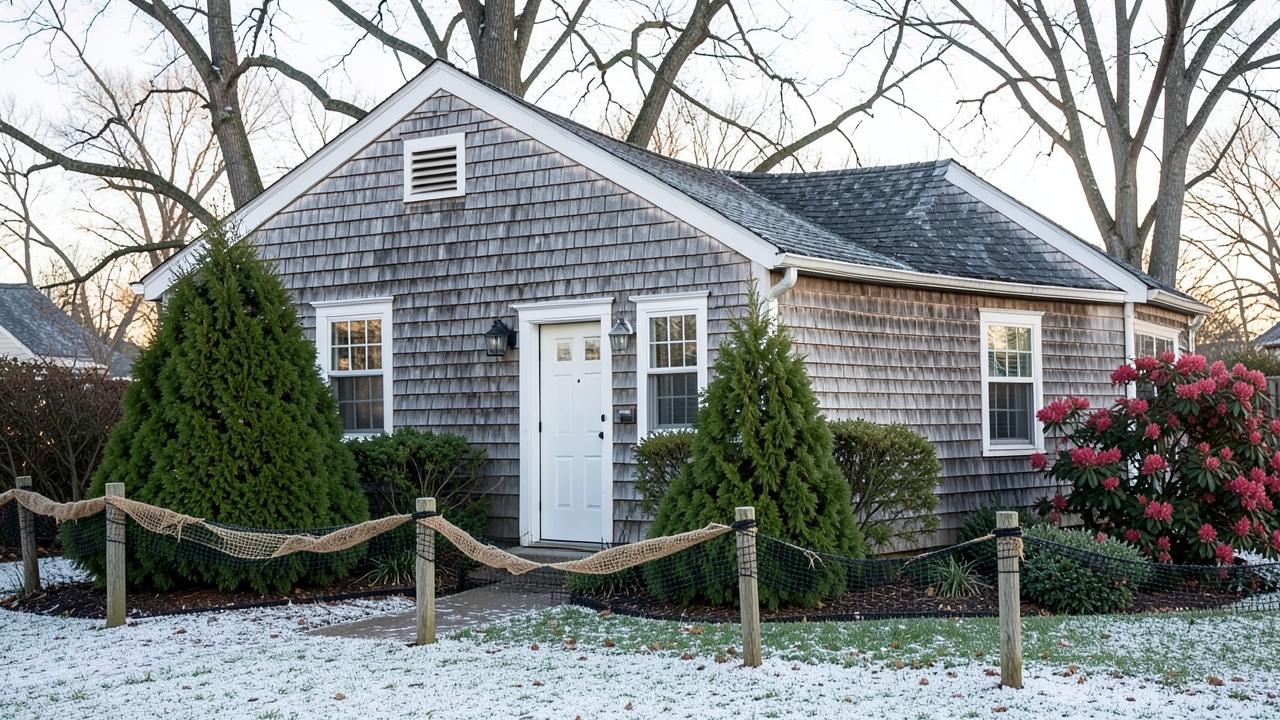 How to Protect Shrubs From Deer in Winter on Cape CodDeer do most of their damage to yews, rhododendrons and arborvitae between now and April. Here is what actually stops them on a Cape Cod property, and what only slows them down.
Want this done on your property?
Free estimates for landscaping, lawn care, and tree work across Cape Cod.