Winter Burn on Evergreens: How to Protect Them on Cape Cod
By Nikola Popov, agronomist and founder of Sofkin Landscaping in Hyannis, MA
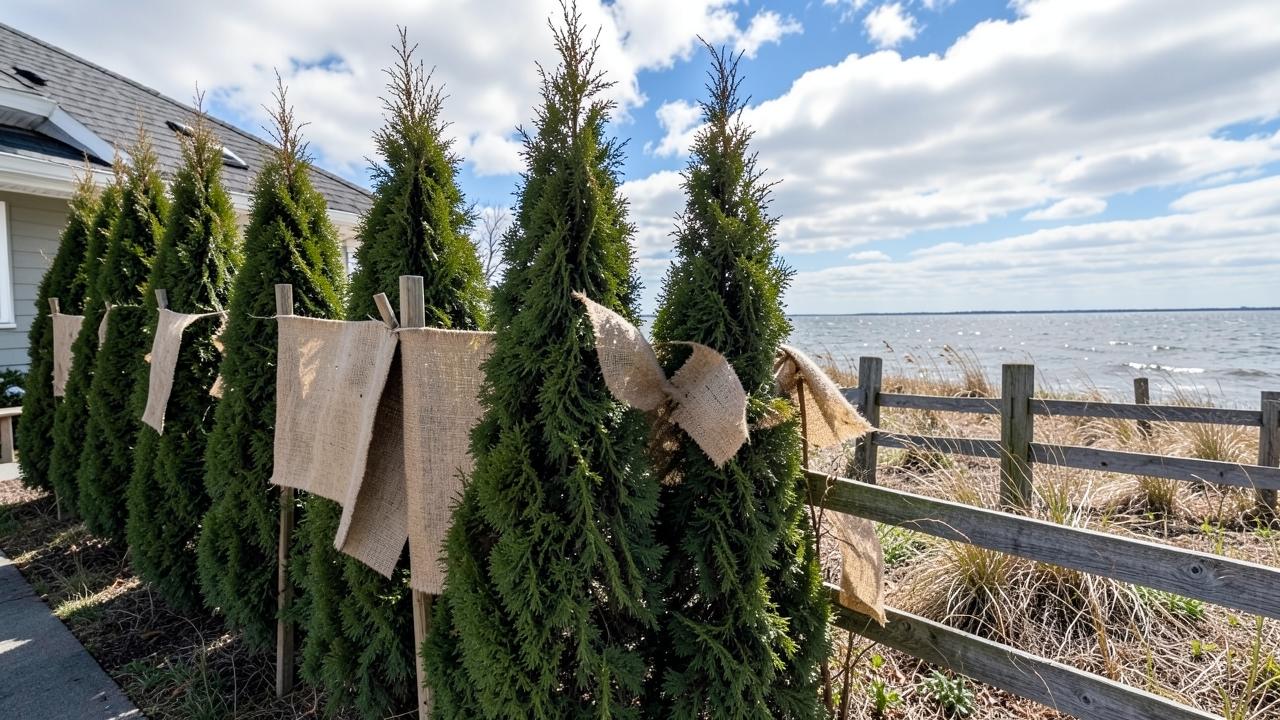
To protect evergreens from winter burn on Cape Cod, do three things before the ground freezes: soak the root zone deeply, put down 2 to 3 inches of mulch, and set up a loose burlap screen on the windward and south sides of the plants that browned last year. Those steps cost little and do most of the work. Anti-desiccant sprays and tight burlap wraps are optional at best, and the wrong way to use them can do harm.
Winter burn is drying damage, not frost damage. Evergreens lose water through their foliage all winter, and when the soil is frozen or bone dry the roots cannot replace it. On the Cape, steady wind, low sun off the water, storm salt spray and fast-draining sand make it worse.
What winter burn looks like and which evergreens get it
Winter burn usually shows up from late February through April, long after the damage was done. Foliage turns tan, reddish brown or bleached on the tips, the top and the side facing the wind or afternoon sun, while the sheltered side often stays green. A row of arborvitae brown only on the side facing the bay or the road points to wind, sun or salt, not disease.
Penn State Extension lists the plants most at risk in three groups, and nearly all of them are common in Cape Cod yards:
- Broadleaf evergreens: boxwood, holly, rhododendron, azalea and mountain laurel. Leaf edges brown first, and rhododendron leaves curl tight on cold days.
- Scale-leaved evergreens: arborvitae, juniper and false cypress. Arborvitae hedges are the plants we see browned most often on exposed lots.
- Needled evergreens: yew, hemlock, pine, spruce and fir. University of Minnesota Extension names yew, arborvitae and hemlock as the most susceptible of all.
- Most at risk within any type: plants set out in the last two years, plants on the windward edge of a lot, and plants beside light walls or pavement that reflect sun.
Why Cape Cod evergreens are more exposed than inland ones
Cold alone is rarely the problem here; the Cape is milder than central Massachusetts in most winters. Wind, sun and sand are.
Sandy soil holds little water. A shrub on a Hyannis or Dennis lot can be dry a foot down a week after a decent rain. University of Wisconsin horticulture guidance says established evergreens need about 1 inch of water a week in fall when it does not rain, and that plants in sandy soil may need closer to 2 inches. Many irrigation systems on the Cape are shut down and blown out in October, so foundation shrubs often get nothing between the last zone run and the first hard freeze.
Wind never really stops. Open lots near the water, cleared new subdivisions and hedges planted as windbreaks take the full force of northwest winter wind, which strips moisture from foliage far faster than still air.
Salt spray adds a second injury. Nor'easters carry ocean spray inland, and plows throw road spray along busy streets. Salt browns needles from the tip back on the side facing the source. Road salt and deicers are covered in our guide to ice melt damage on lawns and shrubs; the burlap screens below also help against spray, according to University of Minnesota Extension.
Thaw and freeze swings. A sunny 45-degree January afternoon wakes up foliage that cannot draw water from frozen roots that night. Minnesota Extension notes chlorophyll does not re-form below about 28°F, which is why foliage bleaches on bright, cold days.
Step 1: Water deeply before the ground freezes
This is the most useful thing you can do in November, and on the Cape there is usually still time. Water stored in the soil and plant tissue carries an evergreen through dry, windy weeks.
Minnesota Extension adds an important caveat: watering only at the very end of fall does not do much if the plant was stressed by drought all summer. Steady moisture through the fall matters more than one big soak in December. If this fall was dry where you are, start now and keep going.
- How much: about 1 inch per week for established shrubs if there is no rain, and up to 2 inches for plants in sandy soil or set out in the last three years, per University of Wisconsin guidance. Use a tuna can or rain gauge to measure.
- Where: soak the whole root zone from the trunk to the drip line, not just the stem. A soaker hose laid in a ring does this well.
- When to stop: keep going on mild days until the top few inches of soil freeze. Water in the morning or midday so the surface is not icing over at night.
- If your irrigation is already winterized: use a hose on a frost-free spigot and drain the hose after each use. Do not restart a blown-out system to water shrubs.
Step 2: Mulch the root zone, but keep it thin
Mulch slows evaporation from sandy soil and keeps the ground from freezing and thawing as often. Penn State Extension notes that snow cover does the same job, but the Cape often goes long stretches with bare ground, so mulch matters more here than in snowier places.
University of Wisconsin guidance caps it at 3 inches: 1 to 3 inches over the root zone, no more. Thick piles hold water against bark and give voles a warm place to work. Keep mulch a few inches from trunks and stems, and if voles have chewed your shrubs before, read our notes on protecting shrubs from voles first.
Shredded bark, pine needles and shredded leaves all work. Do not stuff leaves inside a burlap enclosure; Penn State warns it invites rodents to chew bark.
Step 3: Put up a burlap screen, not a burlap mummy
A burlap screen cuts wind and blocks the low winter sun on the side that needs it. A tight wrap around the whole plant can trap moisture and ice against the foliage and invite disease, and it hides problems until spring. For most Cape Cod shrubs a screen is the better choice.
Put screens only where you need them: the windward side (usually northwest on the Cape, or whichever side faces open water), the south and southwest sides that get afternoon sun, and the side facing a plowed road. Minnesota Extension recommends the south, southwest and windward sides; if a plant burned all the way around last year, enclose it but leave the top open for light and air.
- Stakes: wooden or metal stakes 4 to 5 feet tall, set about 2 feet outside the drip line, as Penn State recommends. For taller arborvitae, use stakes a few inches taller than the plant.
- Burlap: staple or zip-tie natural burlap to the stakes. It should not touch the foliage when the wind blows. A UMass Extension tip: set three stakes in a V with the point facing the prevailing wind and the shrub in the open part of the V.
- Timing: install after the ground starts to firm up but before the worst wind, usually late November to mid-December on the Cape. Driving stakes is much easier before the soil freezes.
- Removal: take screens down in spring once temperatures stay above about 28°F, per Penn State. Leaving them up into warm weather only shades new growth.
Anti-desiccant sprays: when they make sense on the Cape
Anti-desiccant sprays coat leaves with a wax or film meant to slow water loss. Extension advice is split. UMass Extension treats them as an option for broadleaf evergreens such as boxwood, holly and rhododendron, and says results vary. University of Wisconsin and University of Minnesota guidance says research shows they are unreliable and not effective for evergreen foliage: they can flake off too early or stay on too long into spring.
Our view: water, mulch and screens come first. A spray is a reasonable extra for a few exposed broadleaf shrubs you cannot screen, such as a boxwood hedge along a front walk. If you use one, follow the UMass conditions:
- Wait until December for conifers so they are fully dormant. Spraying too early can trap moisture in foliage that later freezes.
- Spray on a dry day around 40 to 50°F with no rain in the forecast, and let it dry fully.
- Cover the whole plant, including leaf undersides. Test a small section first.
- Do not spray waxy blue conifers such as blue spruce; they already have a natural coating.
- Read and follow the product label, which is the legal guide for any spray.
Plan for seasonal homes and next year's plantings
Many Cape evergreens belong to second homes that sit empty from November to May, with nobody to water in a dry December or fix a screen after a storm. Front-load the work: a deep soak and mulch in November, screens on stakes driven well into the ground, and a check after major storms by whoever looks after the property. Our landscape maintenance visits can include fall watering and screen setup for owners who are off-Cape.
Longer term, the best fix for a hedge that browns every winter is often a different plant or a better spot. Penn State recommends planting evergreens by early fall so roots establish before the ground freezes, and avoiding late-summer pruning and fall fertilizing, which push tender growth. For exposed coastal lots, native evergreens such as eastern red cedar and inkberry handle wind and salt better than many nursery arborvitae. Our guides to native plants for Cape Cod and waterfront landscaping list options that hold up near the water.
If your evergreens browned last winter: what to do in spring
Do not rip out a browned shrub in March. Minnesota Extension notes that brown foliage is most likely dead, but buds are hardier than leaves and often push new growth that fills in the gap. Scratch a stem with a thumbnail: green and moist underneath means the branch is alive.
Wait until mid-spring, when new growth starts, to judge the damage. Then prune dead branches back to live tissue and water through the season. Yew and boxwood usually recover from moderate burn. Arborvitae and juniper rarely sprout from old bare wood, so heavily burned sections may never fill in; if more than about half a plant is gone, replacing it is usually the smarter choice.
If you are not sure whether a hedge is worth saving, or you want screens and late-fall watering handled before you close up the house, ask us for a free estimate and we will walk the property with you.
Frequently asked questions
Why are my arborvitae turning brown in winter?
Most often it is winter burn: wind and sun pull water from the foliage while frozen or dry soil keeps the roots from replacing it. Browning on one side, usually the windward, south or road-facing side, points to burn or salt spray rather than disease.
When should I put burlap on evergreens on Cape Cod?
Late November to mid-December is typical, after the plants are dormant but before the soil freezes hard enough to make driving stakes difficult. Take it down in spring once temperatures stay above about 28°F.
Do anti-desiccant sprays work?
Results are mixed. UMass Extension lists them as an option for broadleaf evergreens, while the University of Wisconsin and University of Minnesota say research shows they are unreliable. Use them, if at all, as an extra for exposed broadleaf shrubs, never instead of watering and screening.
Will winter burned evergreens grow back?
Often, yes, if the buds survived. Wait until mid-spring, check stems for green tissue, and prune only what is clearly dead. Yew and boxwood recover well; arborvitae and juniper rarely regrow from old bare wood.
Should I water evergreens in December?
Yes, on mild days if the ground is not frozen and the fall was dry. Water in the morning or midday, soak to the drip line, and drain the hose afterwards.
Related services
More from the blog
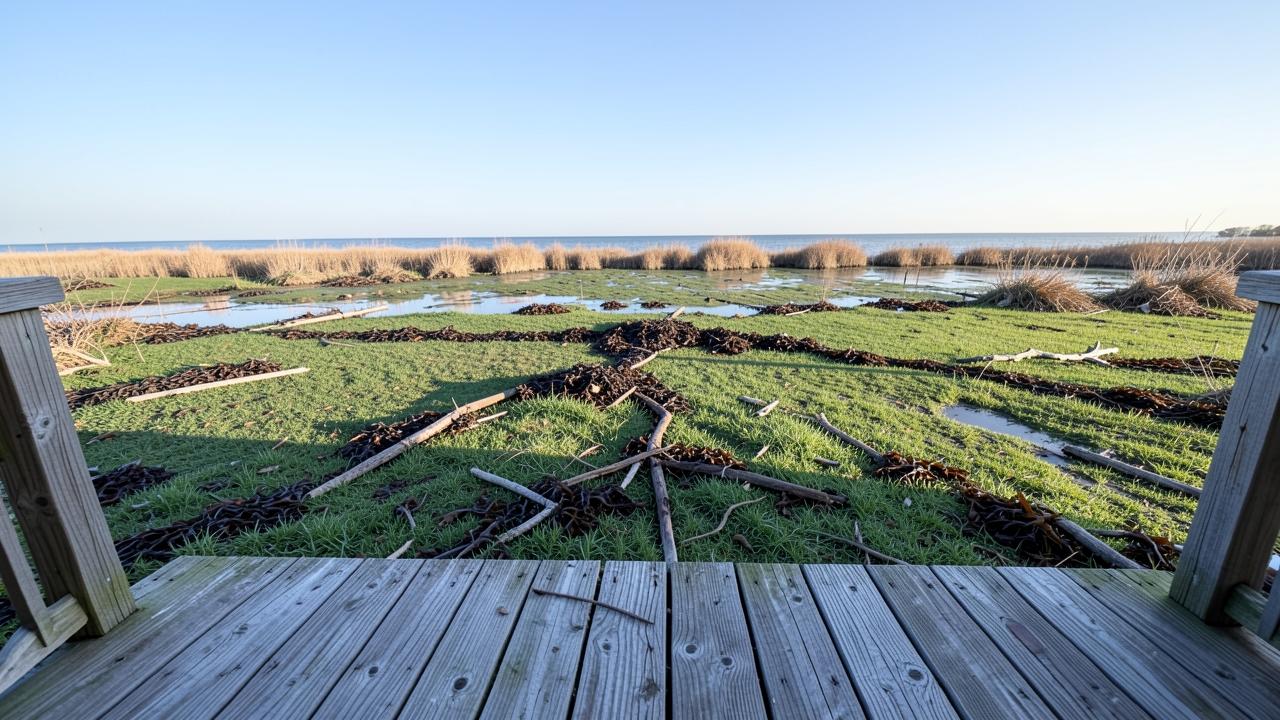 Saltwater Flooding on Your Lawn: Cape Cod Recovery After a Storm TideA storm tide over the lawn is not always a death sentence. Here is what to do in the first days, what to leave alone over winter, and how to judge the damage in spring.
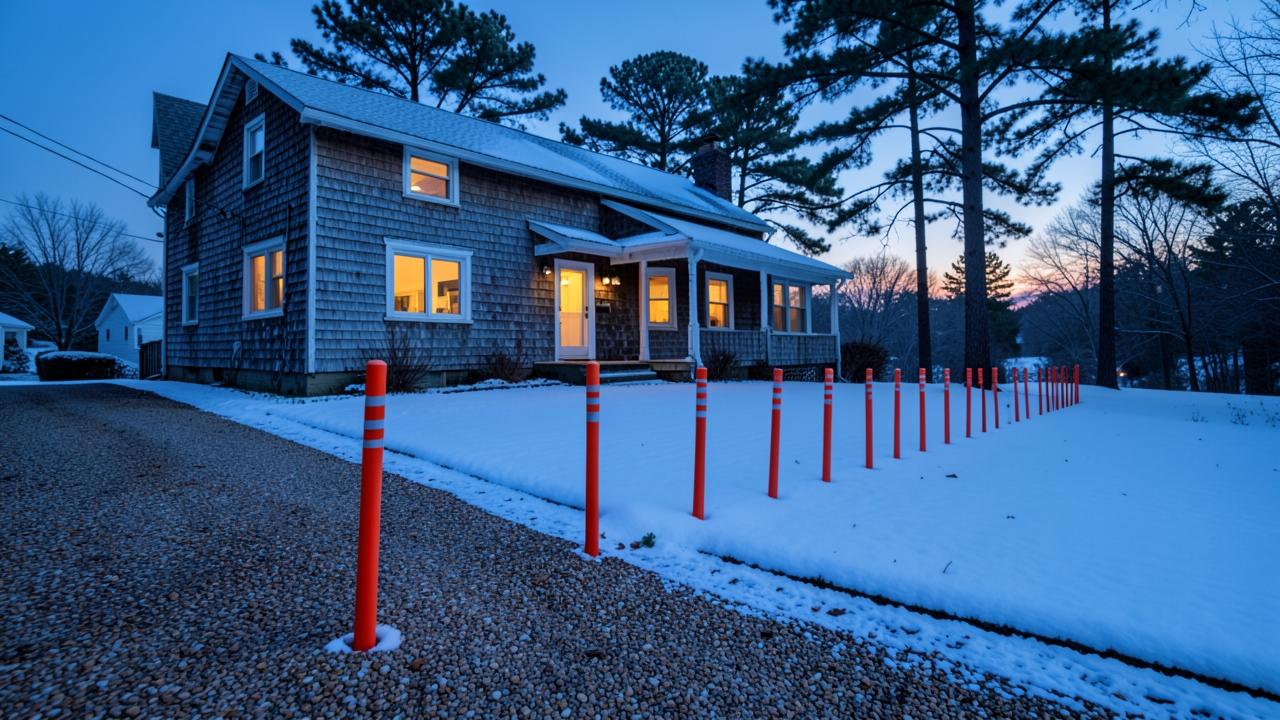 Snow Plow Damage to Lawns: Stake Your Cape Cod Yard Before It FreezesMost plow damage happens because the driver cannot see where the pavement ends. A couple of hours with snow stakes in late November prevents most of it.
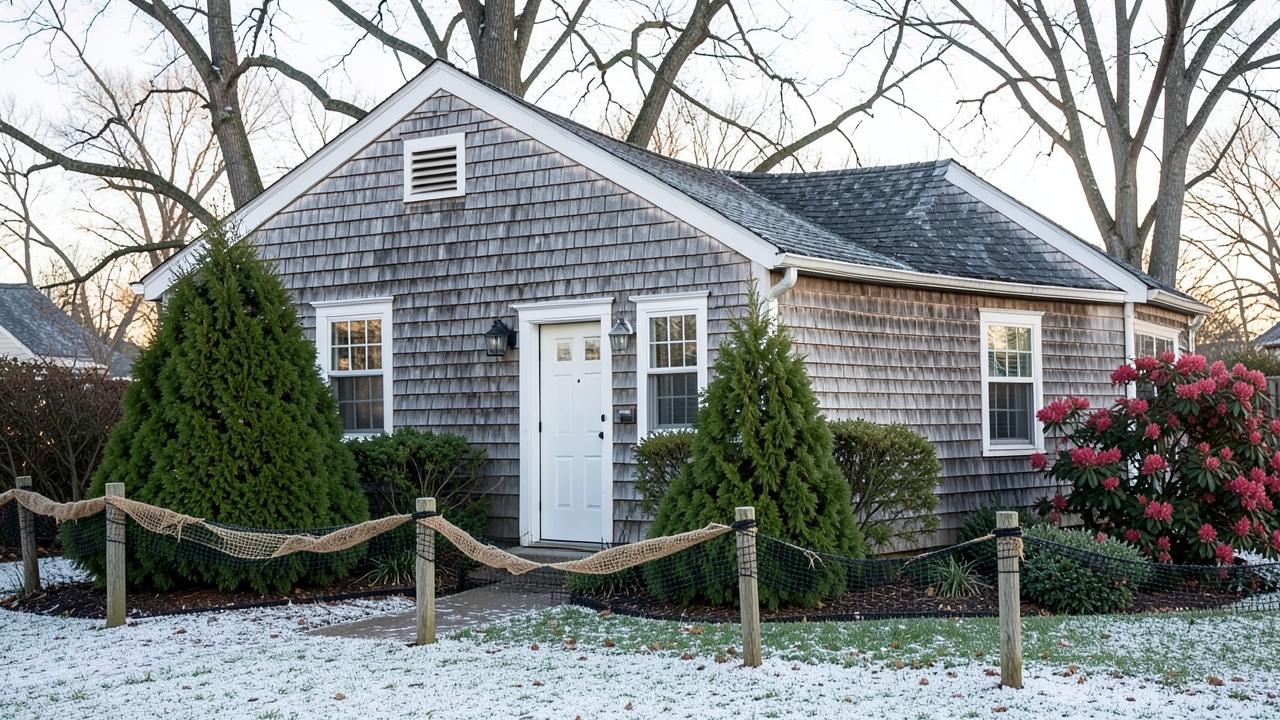 How to Protect Shrubs From Deer in Winter on Cape CodDeer do most of their damage to yews, rhododendrons and arborvitae between now and April. Here is what actually stops them on a Cape Cod property, and what only slows them down.
Want this done on your property?
Free estimates for landscaping, lawn care, and tree work across Cape Cod.