Saltwater Flooding on Your Lawn: Cape Cod Recovery After a Storm Tide
By Nikola Popov, agronomist and founder of Sofkin Landscaping in Hyannis, MA
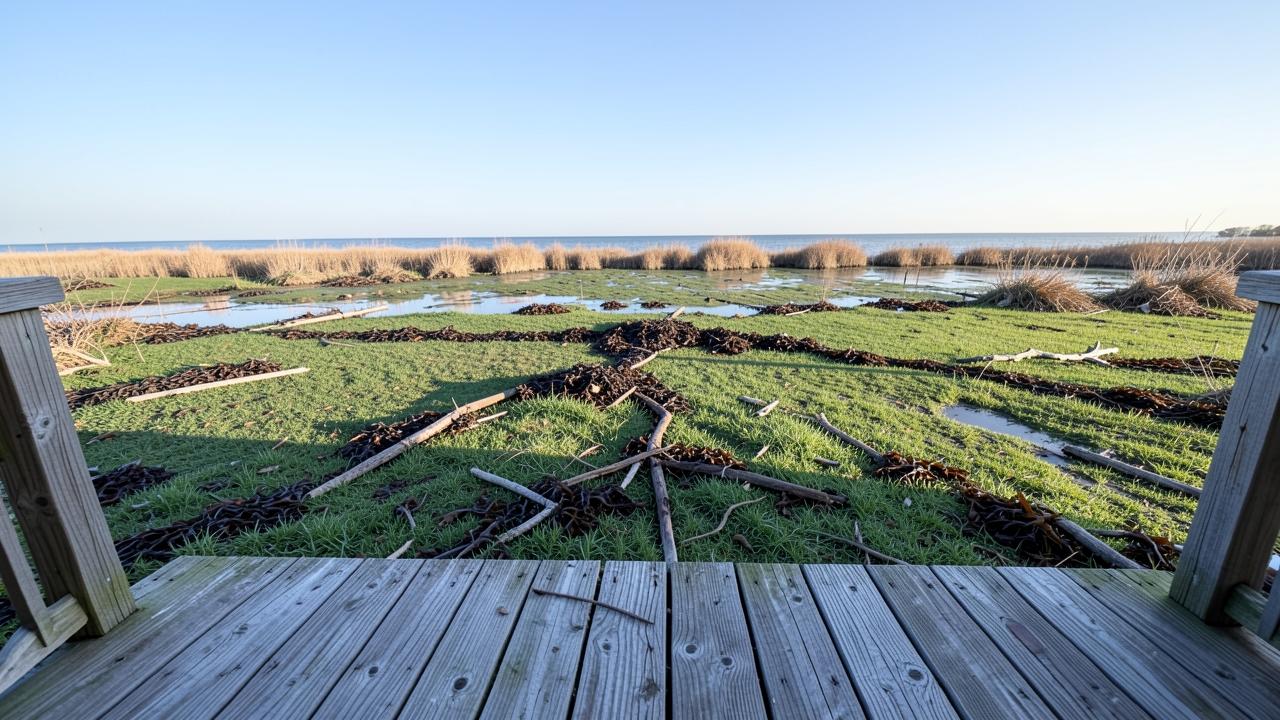
If saltwater flooding covered your lawn in a storm tide, the most useful things you can do are simple: get the debris and sand off the grass quickly, rinse salt off shrubs if you can, keep heavy equipment off the wet ground, and let fresh water push the salt down through the soil before you seed, feed or rip anything out. On Cape Cod's sandy soil, rain and snowmelt do much of that work over a winter. What you should not do is reach for fertilizer or a bag of gypsum on day one.
Nor'easter season runs from now into March, and on low-lying waterfront lots a high tide plus onshore wind can push seawater across marsh edges and into yards. The damage often does not show for months, so what you do right after the water drains, and your patience in spring, matter more than any product.
What seawater actually does to grass, shrubs and soil
Salt hurts plants in a few different ways. Dissolved salt in the soil holds on to water, so roots in wet ground can still be short of moisture, a kind of drought you cannot see. Sodium crowds out nutrients like potassium, and chloride moves into the leaves, where it interferes with photosynthesis and burns leaf edges and needle tips. UMass Extension's fact sheet on salt injury explains these effects for road salt, and the chemistry is the same when the salt arrives on a storm tide.
There is one piece of good news for most Cape properties. Sodium does its worst structural damage in finer soils, where it disperses clay and silt particles and clogs the pores water needs to drain. According to Rutgers turfgrass researchers, very sandy coastal soils lack those small particles, so sodium is less of a concern for soil structure there. Our sand drains fast, so it also gives up salt faster than heavier soil once fresh water moves through it.
The exceptions are spots that do not drain: low hollows where water stood for days, beds amended with a lot of clay-rich loam, areas compacted by vehicles, and lawns near a marsh with a high water table. Those are the places where salt lingers.
The first 48 hours: a checklist after the water drains
Safety first: stay away from downed wires and undercut seawalls or banks, and let the tide cycle settle before you walk the edge of the property. Then work through this list:
- Get debris and sand off the grass. Seaweed, eelgrass wrack and sand smother turf quickly. NC State Extension advises removing sediment or debris two or more inches deep from turf as soon as possible. Rake it into piles off the lawn.
- Rinse salt off shrubs and evergreens if the temperature is above freezing and you have a working hose. A good soaking rain does the same job, so do not fight frozen outdoor plumbing for it.
- Stay off saturated ground. Trucks, skid steers and even wheelbarrows on wet soil compact it, and compacted soil holds salt longer.
- Do not fertilize. Flooded roots need time before they can use nutrients, and fertilizer salts add to the salt load you are trying to flush out.
- Do not prune living wood yet. Remove only branches that are broken or hanging. Browned evergreen needles are not proof the branch is dead.
- Photograph how far the water reached. It tells you later which areas need a soil test.
Flushing salt out with fresh water, in a Cape Cod winter
Fresh water moving down through the root zone is the main cure. Clemson's saltwater remediation guidance recommends about 1 inch of water per flushing event, and reports that roughly 6 inches in total flushes about 50 to 70 percent of the sodium from the soil. The UMass soil lab suggests that flushing with 2 to 4 inches of fresh water may be needed when soluble salts test high.
In summer you would do that with sprinklers. In December your irrigation system should already be blown out (see our irrigation winterization guide), and you should not recharge it just to flush a lawn. In practice, a Cape winter usually supplies that water for you: rain and snowmelt soaking through sand carry salt below the root zone of dormant grass. Your job is to make sure that water can drain:
- Clear sand or debris that dams low spots and keeps water standing.
- If a hollow stays puddled for days after rain, note it; it is a candidate for core aeration or regrading in spring.
- In mild weather, hand-watering salted beds with a hose, about an inch at a time a few days apart, is worth doing.
- If your irrigation draws from a private well near the shore or from a pond, make sure that source was not reached by seawater before you use it to flush anything.
Should you use gypsum? Test before you buy
Gypsum (calcium sulfate) is the product most often recommended after saltwater flooding. The calcium swaps places with sodium on soil particles so the sodium can be washed away. It earns its place on clay and silt soils. On sand it often does little: Clemson specifically says not to use gypsum on sandy soils with low sodium levels, and Rutgers notes sodium is less of a structural problem in single-grained coastal sands.
So the sensible order on the Cape is to test first. The UMass Soil and Plant Nutrient Testing Laboratory offers soluble salts as an optional add-on to its routine soil analysis, and lists sea spray and brackish water among the causes of high salts. Sample the flooded area and, separately, an unflooded part of the yard for comparison, following the lab's sampling instructions.
Timing matters. Sampling right after the storm tells you the worst case. Sampling again in March or early April, after a winter of rain, tells you whether you can seed and plant. If the spring numbers are still high in a low, poorly drained area, that is where gypsum, aeration and extra flushing make sense. Clemson's rate for turf is 50 pounds of granular gypsum per 1,000 square feet, applied monthly with an inch of fresh water after each application until a soil test shows salts falling.
Is the lawn dead or just dormant?
Cape lawns are mostly fine fescues, often mixed with some perennial ryegrass, tall fescue or Kentucky bluegrass. Rutgers rates most fine fescues as moderately salt tolerant, and puts perennial ryegrass, slender creeping red fescue and tall fescue among the most tolerant cool-season grasses. Annual bluegrass and rough bluegrass, the weedy grasses that creep into shady, wet corners, are among the most sensitive.
You do not have to wait until May to find out what survived. Rutgers describes a simple test: cut a few plugs of sod from the flooded area, pot them in salt-free potting mix, keep them in a sunny window at 65 to 75 degrees F and water them so the salt leaches out. Live grass should push new leaves within about a week. If the plugs stay brown, plan to renovate that area.
If you do need to reseed, wait until the salt is flushed; Clemson advises flushing thoroughly before seeding, because salty soil kills seedlings first. For areas that will clearly need it, dormant seeding over winter is risky if the soil has not been tested. The safer plan is to rake out dead turf in early spring, test, then seed with a salt-tolerant blend. Our guide to the best grass types for Cape Cod covers which fescues hold up near the water.
Trees and shrubs: why you should wait until summer to judge
Woody plants are slower to show salt injury and slower to tell you whether they will recover. UMass notes that damage from salt in the soil can be delayed until summer or even years later, often appearing in hot, dry weather. Expect browned needle tips, delayed or uneven bud break, small leaves and twig dieback on the side or section that sat in water.
Some plants handle it better than others. In the UMass list, rugosa rose, junipers, red oak, white spruce and sumac are among the more tolerant. Eastern white pine, red maple, eastern hemlock, boxwood, viburnum and serviceberry are listed as sensitive. UMass also points out that salt tolerant does not mean injury free, and that ratings vary by source and by whether the salt reached leaves or roots.
The practical plan for winter is to leave everything standing, remove only broken limbs, and look again after the first flush of growth in late May or June. A tree that leafs out thinly may recover over a season or two; one that stays bare should come out. If a large tree near the house sat in seawater for a long time, have it looked at, because root damage can make an otherwise healthy-looking tree less stable. Our tree services team can assess it with you before the next storm rather than after.
Seasonal homes and replanting smarter
If you close the house for winter, a storm tide may come and go without anyone seeing it. Ask a neighbor, caretaker or your landscaper to walk the yard after major coastal storms, clear debris off the lawn, and send you photos of the high-water line.
When you rebuild beds that flood repeatedly, use what already grows in that zone. Bayberry, beach plum, rugosa rose and eastern red cedar suit Cape properties exposed to salt, and on lots next to a salt marsh a meadow-style buffer often makes more sense than lawn. Keep in mind that regrading, adding fill, removing storm-deposited sand from a beach, dune or coastal bank, or planting within those resource areas and their buffer zones usually needs approval from your town's conservation commission. Call them before work starts, not after.
If you want help sorting out what survived, testing the soil in spring and replanting with salt-tolerant plants, our specialty plantings and lawn care crews work on waterfront properties across the Cape. You can request a free estimate any time,
Frequently asked questions
Will saltwater kill my lawn?
Not always. Short flooding of a fine fescue lawn on sandy, well-drained soil often thins it rather than kills it, especially in winter when the grass is dormant and rain flushes the salt. Long standing water, poor drainage and sensitive grasses like annual bluegrass lead to more dieback. A sod plug test or a spring soil test will tell you which you have.
How long does salt stay in the soil after a storm surge?
It depends on drainage and how much fresh water moves through. Clemson reports that about 6 inches of fresh water removes roughly 50 to 70 percent of the sodium. On Cape Cod sand a wet winter often does most of that, but low, compacted or clay-amended spots can stay salty into spring, which is why testing before you seed is worth it.
Should I put down lime or gypsum after saltwater flooding?
Gypsum helps mainly on finer soils with high sodium, and Clemson advises against it on sandy soils with low sodium. Lime only raises pH and does not remove salt. Test first, then decide. On most Cape lawns, fresh water and good drainage do more than either product.
When can I reseed after saltwater flooding?
After the salt has been flushed out. On the Cape that usually means testing in March or early April and seeding in spring, or waiting for the more reliable late-summer seeding window if salts are still high. Seeding into salty soil wastes seed, because seedlings are the most sensitive stage.
Do I need a permit to clean up after a storm tide?
Raking debris off your lawn does not usually need one, but moving sand, regrading, adding fill or replanting on a beach, dune, coastal bank or near a salt marsh often falls under your town's conservation commission. Check with them before doing more than routine cleanup.
Related services
More from the blog
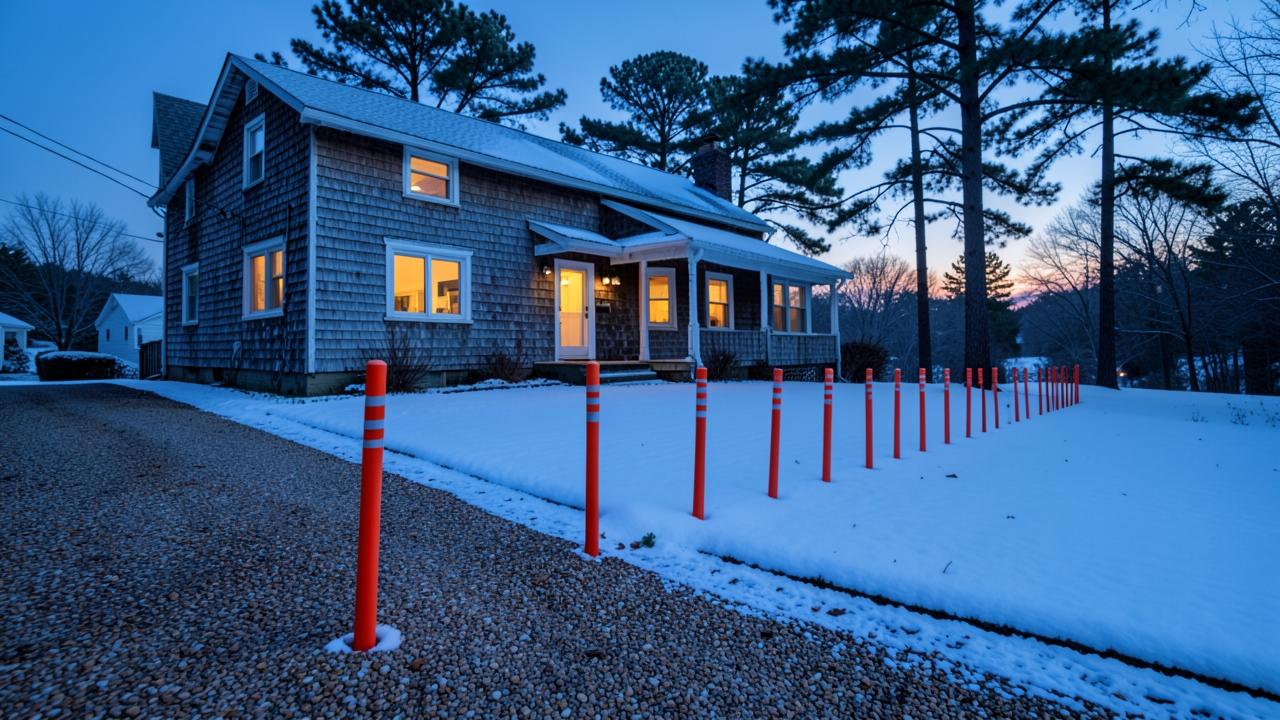 Snow Plow Damage to Lawns: Stake Your Cape Cod Yard Before It FreezesMost plow damage happens because the driver cannot see where the pavement ends. A couple of hours with snow stakes in late November prevents most of it.
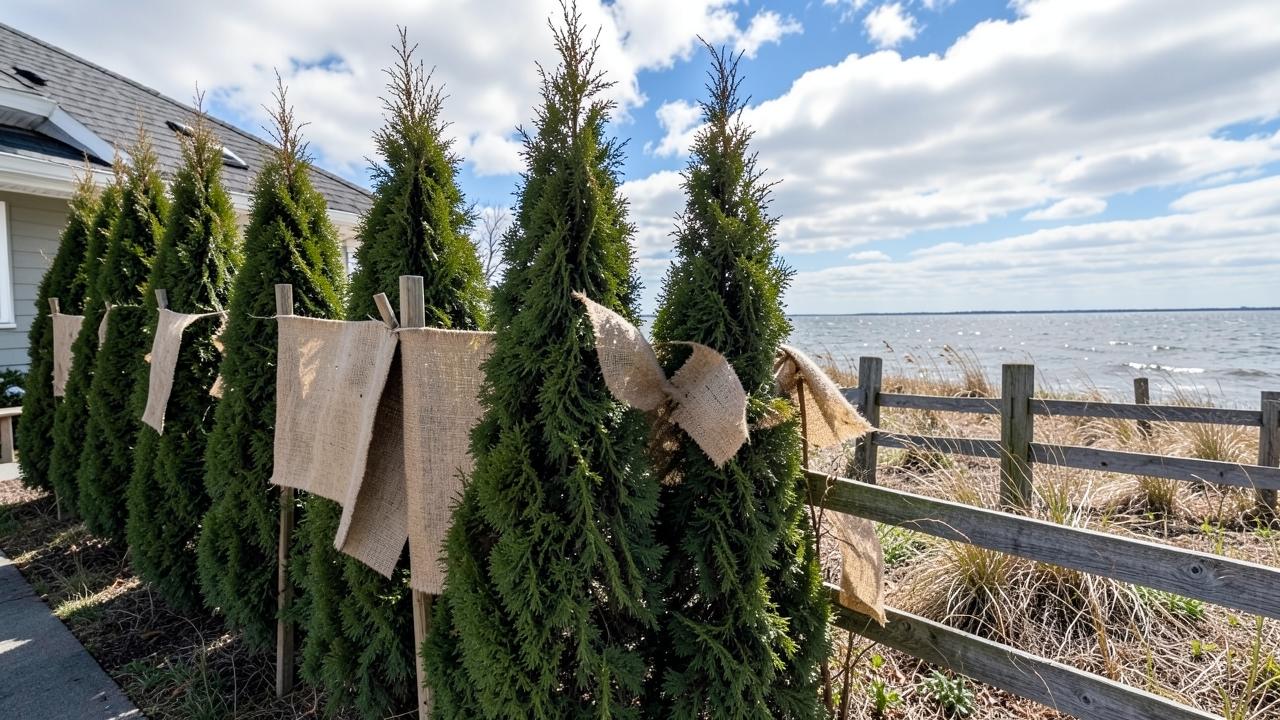 Winter Burn on Evergreens: How to Protect Them on Cape CodBrown arborvitae and boxwood in March usually start with dry soil and wind in November. Here is what to do now on Cape Cod, and what not to bother with.
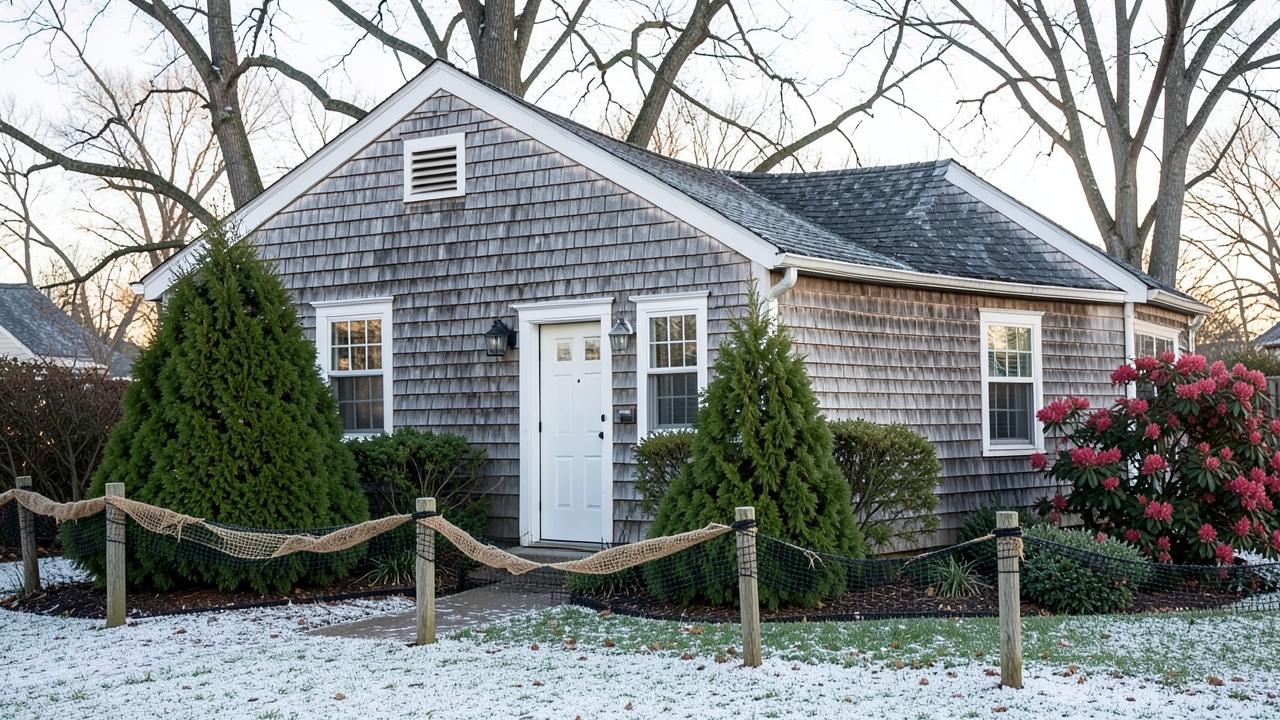 How to Protect Shrubs From Deer in Winter on Cape CodDeer do most of their damage to yews, rhododendrons and arborvitae between now and April. Here is what actually stops them on a Cape Cod property, and what only slows them down.
Want this done on your property?
Free estimates for landscaping, lawn care, and tree work across Cape Cod.