How to Protect Shrubs From Deer in Winter on Cape Cod
By Nikola Popov, agronomist and founder of Sofkin Landscaping in Hyannis, MA
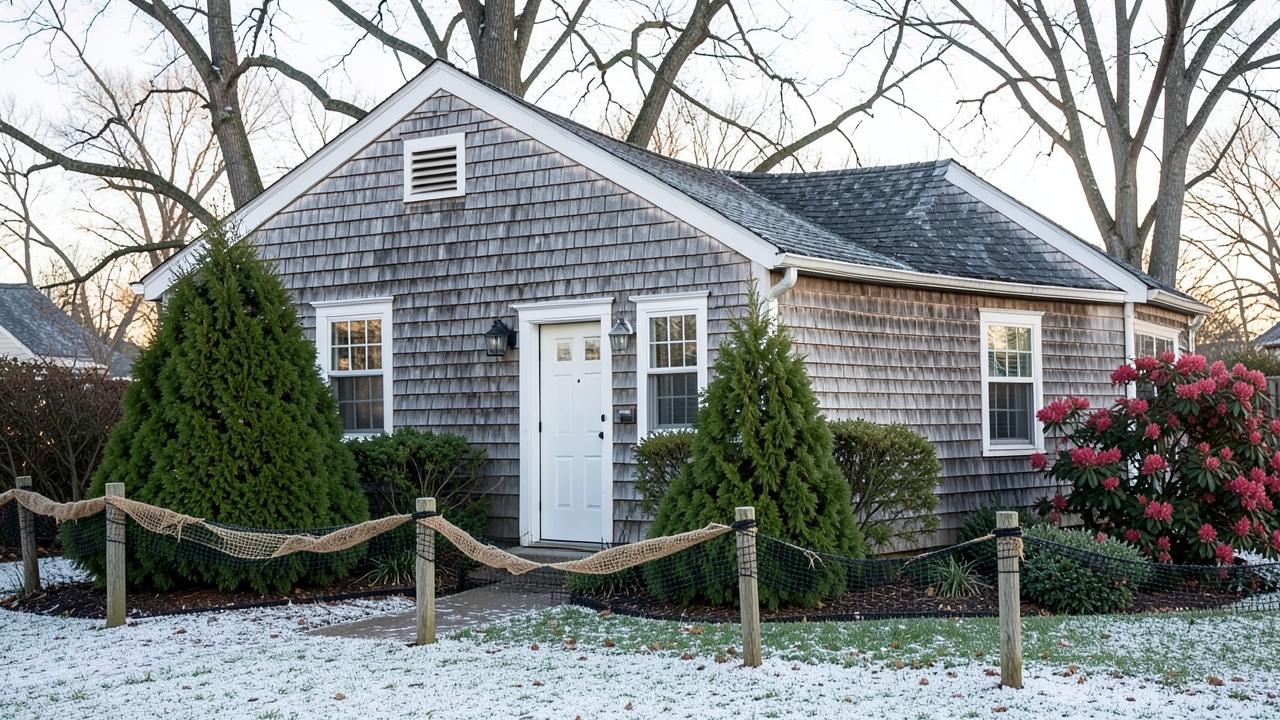
To protect shrubs from deer in winter, put a physical barrier between the deer and the plant before the ground freezes: a fence at least 8 feet tall around a whole bed, or a cage or wrap at least 6 feet tall around individual shrubs. Repellent sprays help, but they wash off, need reapplying through the winter and tend to fail in late winter, exactly when deer are hungriest. On Cape Cod, where many homes sit empty from Columbus Day to Memorial Day, barriers are usually the only option that keeps working without someone on site.
Below is how to tell which of your shrubs are at risk, which barrier fits which situation, where repellents make sense, and what to do in spring if the deer got there first.
Which shrubs deer eat in a Cape Cod winter
Deer eat hundreds of plant species, but they have favorites, and in winter the favorites are the evergreens that anchor most Cape Cod foundation plantings. According to the UMass Extension fact sheet on deer in the landscape, yew, rhododendron, euonymus, balsam fir and ornamental cherry are among the plants frequently severely damaged. Hydrangea, viburnum, privet, rugosa rose and eastern red cedar fall in the "occasionally severely damaged" group. Iowa State Extension singles out arborvitae and yew as the evergreens most likely to be browsed in winter.
Plants that deer tend to pass over include American holly, inkberry, Japanese pieris, Chinese juniper, bayberry, boxwood and forsythia, based on the UMass list of plants less favored by deer. Several of these are natives that already handle sandy soil and salt spray well, which makes them a natural fit for coastal beds.
Two caveats matter. First, "less favored" is not "deer-proof": UMass notes that no plant resists deer under all conditions, and a hungry deer in February will eat things it ignored in October. Second, young plants are at the highest risk regardless of species. Anything planted this year or last deserves protection even if it is on the safer list.
- Highest risk: yew, arborvitae, rhododendron, euonymus, young fruit and ornamental cherry trees
- Moderate risk: hydrangea, viburnum, privet, rugosa rose, eastern red cedar, hemlock
- Lower risk: American holly, inkberry, pieris, juniper, bayberry, boxwood
How to tell deer damage from other winter damage
Before you buy fencing, make sure deer are the problem. Deer have no upper front teeth, so they tear twigs and leave ragged, shredded ends. Rabbits and rodents leave a clean, angled cut. Voles work at ground level, often under snow or mulch, and chew bark around the base of the stem rather than eating foliage.
Deer browse also leaves a pattern. Foliage disappears from the bottom of the plant up to about the height a deer can reach, which gives arborvitae and yews a bare-legged look with a sharp line above it. If needles or leaves are brown but still attached, you are more likely looking at winter burn from wind and salt spray, which our fall cleanup checklist covers. Hoof prints in sandy beds and droppings near the shrubs settle the question.
Barriers that work, and where each one fits
Physical exclusion is the only method extension services describe as reliable. The right type depends on how many plants you are protecting and how they are laid out.
- Full fence around a bed or yard. UMass recommends woven wire or plastic mesh at least 8 feet tall on sturdy posts, because deer can clear about 10 feet and will push down a weak fence. This is the most dependable option and also the most visible, so it suits back gardens and orchards better than front foundation beds.
- Short fence around a small enclosure. Iowa State notes that for enclosures smaller than about 8 by 16 feet, a fence of about 50 inches is often enough, because deer are reluctant to jump into a small space they cannot see a clear landing in.
- Cages around single shrubs. Wire cylinders or tubes should be at least 6 feet tall, or shorter with a top screened over so deer cannot reach in from above. Stake them so they cannot be pushed over, and keep a few inches between the wire and the foliage.
- Netting or burlap wraps. Wrapping individual shrubs is inexpensive and does double duty on the Cape: the same burlap that keeps deer off also shields broadleaf evergreens from drying wind and salt spray. It is labor-intensive for long hedges, and a wrap that is too tight can trap moisture and break branches under wet snow.
- Two-wire electric fence. UMass describes a setup with one wire 10 to 12 inches above the ground and a second about 36 inches up. It works for gardens where the power and maintenance are practical, which rules it out for most unattended seasonal properties.
When repellents make sense, and when they do not
Repellents come in two kinds. Contact repellents, often based on capsaicin or putrefied egg, make the plant taste bad. Area repellents rely on smell. Both can cut damage, but the extension guidance is consistent about their limits.
UMass advises starting early in fall, before deer settle into their winter feeding areas, and reapplying regularly, especially after heavy rain. Iowa State recommends reapplying almost weekly or sooner after rain or snow, spraying only when it is above freezing and dry, rotating products so deer do not get used to one, and treating from about 6 feet down. Both note that repellents tend to fail in late winter and early spring, when food is scarce and deer will eat almost anything.
On Cape Cod, those rules are hard to follow. Winter here brings repeated rain and nor'easters that rinse foliage, and dry days above freezing can be scarce in January. If the house is empty all winter, nobody is there to respray. Our view: repellents are a good tool for a year-round resident with a handful of plants, or as a supplement on shrubs that cannot be caged. They are a poor sole defense for a seasonal home.
Scare devices such as motion lights, noisemakers and sprinklers have a short shelf life too. UMass notes deer quickly get used to them. Removing attractants helps more: take down bird feeders that drop seed, and do not leave apples or corn out for deer.
A winter plan for seasonal homes
If you close the house in fall, the goal is protection that holds up for five months with little or no attention. A practical sequence looks like this:
- Before you leave (ideally September to November): walk the property, list every yew, arborvitae, rhododendron and young tree, and decide which get a fence, a cage or a wrap.
- Before the ground freezes: set posts and stakes. On sandy Cape soil this is easy in November and much harder once frost sets in.
- After big storms: have someone check that cages are upright and netting has not blown loose. A barrier with a gap is close to no barrier.
- April: Iowa State recommends removing barriers and stopping repellents in April, after browsing ends and before new growth starts. Leaving burlap on into warm weather can harm the plant.
What to do in spring if deer got there first
Do not rip out a browsed shrub in March. Whether it recovers depends on whether buds survived. Iowa State explains that if buds remain on the browsed stems of arborvitae, the lower branches will produce new growth in spring, usually visible by early summer. If the stems were stripped bare of buds, those sections will not regrow, and the plant will stay bare at the bottom.
Wait until new growth starts, then clean up torn twig ends with sharp pruners so they heal neatly. Yews generally regrow from older wood better than arborvitae do, so a hard-hit yew is often worth keeping and shaping. A hedge of arborvitae with bare lower trunks is usually better handled by planting a lower, less favored shrub in front of it, such as inkberry or bayberry, than by waiting for growth that will not come.
If the same bed gets hit every winter, the long-term answer is the planting itself. Mixing in species deer favor less, especially natives suited to the Cape, reduces the damage and the yearly work. Our guide to native plants for Cape Cod landscapes is a good place to start, and our specialty plantings team can redesign a bed that keeps losing.
If you would rather not handle fencing and wraps yourself, especially on a house you will not see until spring, our property maintenance crews can install and remove winter protection on a schedule. Request a free estimate and tell us which plants you want protected.
Frequently asked questions
Is it too late in November to protect shrubs from deer?
No. Deer damage to ornamentals mostly happens from late fall through early spring, and the worst browsing comes in late winter. Get cages, wraps or fencing in place before the ground freezes so stakes and posts can still be driven.
Are hydrangeas deer resistant?
Not really. UMass Extension lists hydrangea among plants occasionally severely damaged. In winter there are fewer leaves to lose, but deer can still eat the buds on stems, which affects flowering on varieties that bloom on old wood.
Does Irish Spring soap or human hair keep deer away?
Scent-based tricks may work briefly in low-pressure areas, but there is little reliable evidence for them, and deer get used to odors and scare devices quickly. For shrubs you cannot afford to lose, use a physical barrier.
How tall does a deer fence need to be?
UMass Extension recommends at least 8 feet for a fence around a large area, since deer can jump about 10 feet. Iowa State notes a fence of about 50 inches is often enough for enclosures smaller than roughly 8 by 16 feet.
Will arborvitae grow back after deer eat it?
Only where buds survived on the browsed stems. If buds remain, new growth appears in spring and is usually visible by early summer. Bare, budless stems will not refill, so plan to screen or replace those sections.
Related services
More from the blog
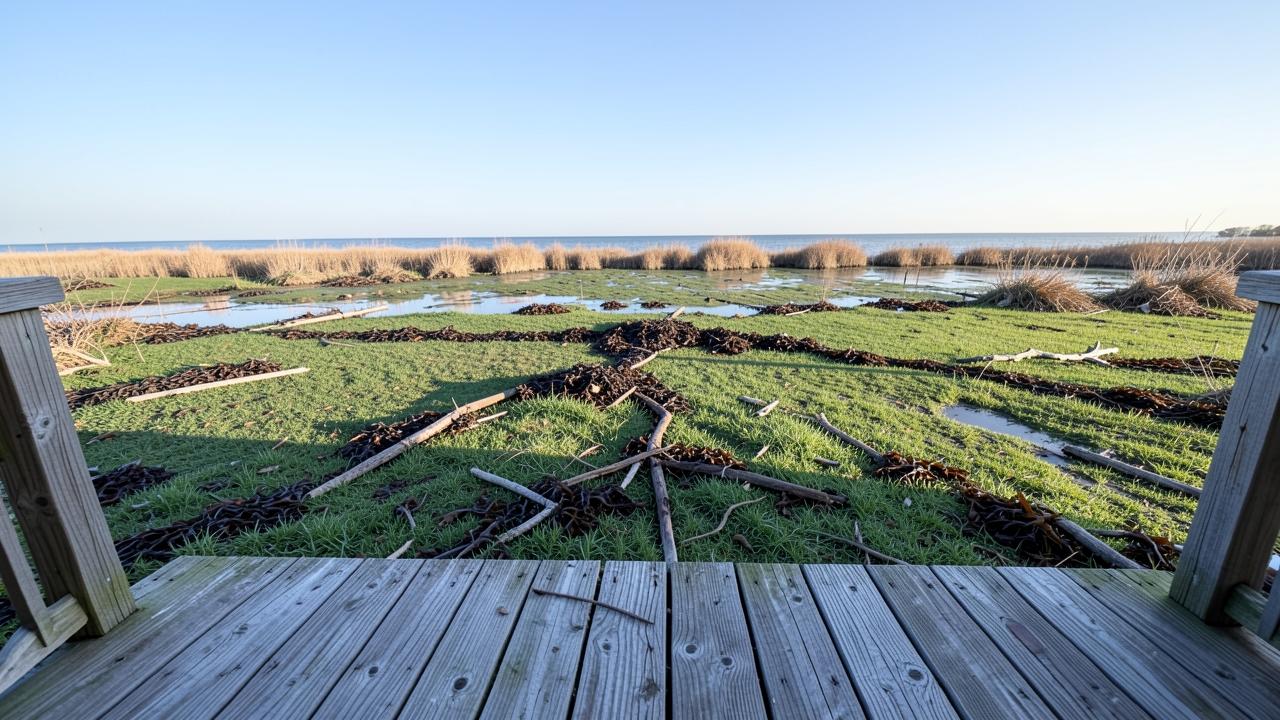 Saltwater Flooding on Your Lawn: Cape Cod Recovery After a Storm TideA storm tide over the lawn is not always a death sentence. Here is what to do in the first days, what to leave alone over winter, and how to judge the damage in spring.
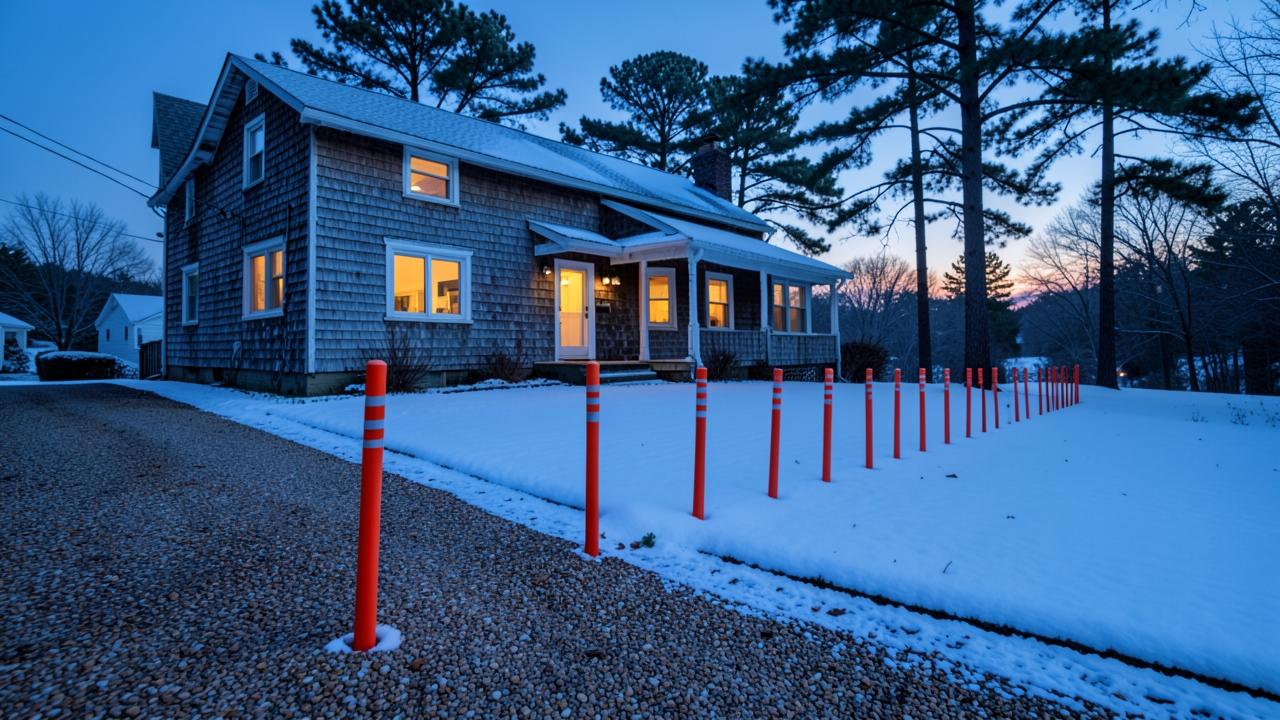 Snow Plow Damage to Lawns: Stake Your Cape Cod Yard Before It FreezesMost plow damage happens because the driver cannot see where the pavement ends. A couple of hours with snow stakes in late November prevents most of it.
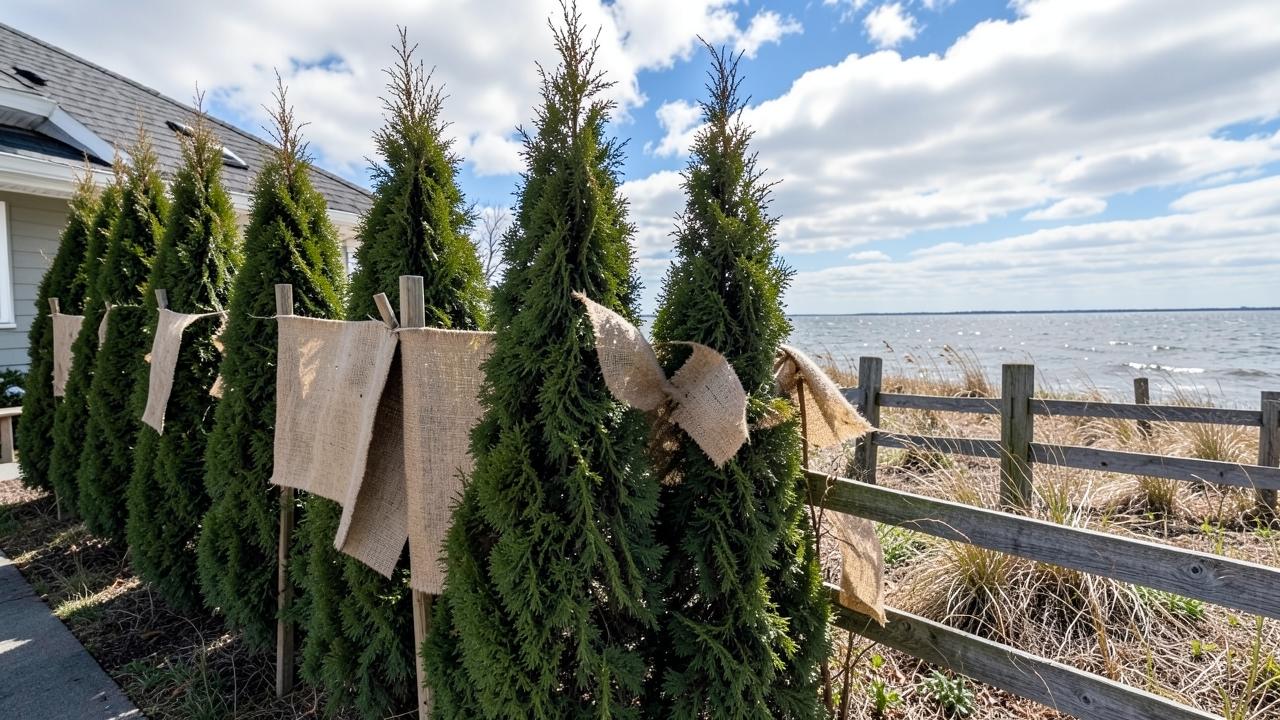 Winter Burn on Evergreens: How to Protect Them on Cape CodBrown arborvitae and boxwood in March usually start with dry soil and wind in November. Here is what to do now on Cape Cod, and what not to bother with.
Want this done on your property?
Free estimates for landscaping, lawn care, and tree work across Cape Cod.