Vole Damage on Cape Cod: Protect Lawns and Shrubs Before Winter
By Nikola Popov, agronomist and founder of Sofkin Landscaping in Hyannis, MA
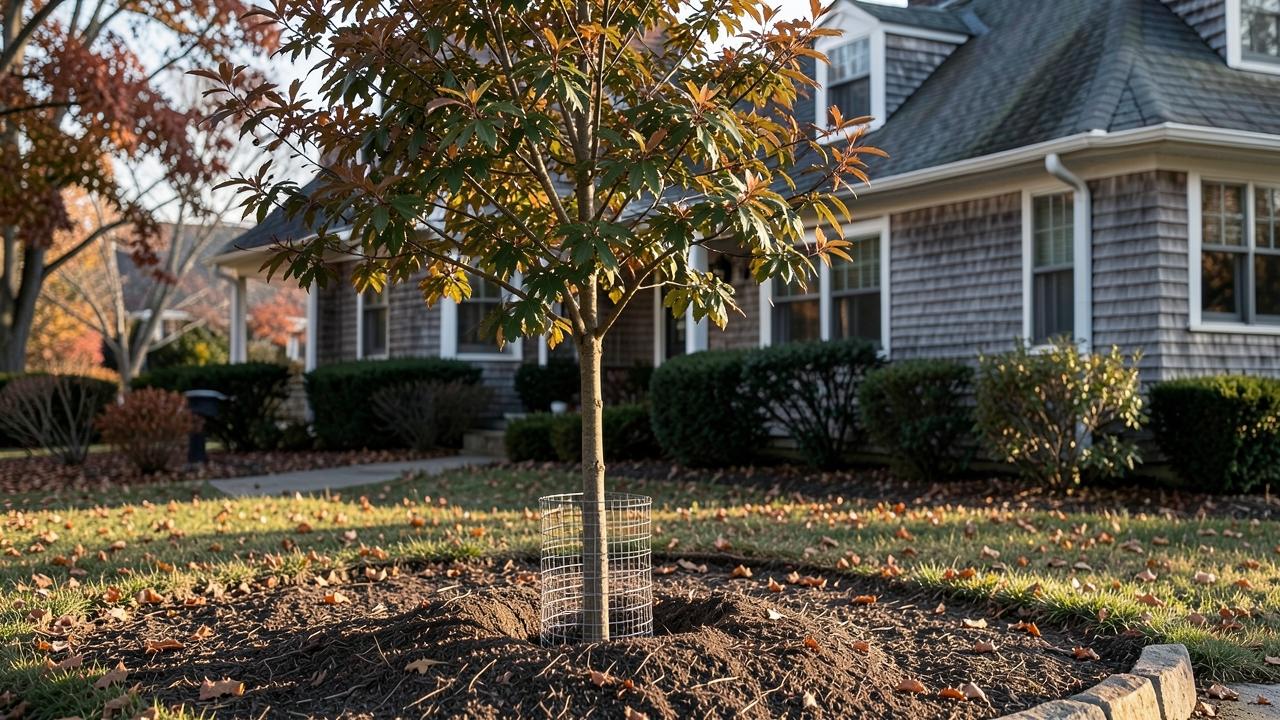
Vole damage on Cape Cod is mostly a winter problem you can only prevent in the fall: the voles chew grass and bark under snow and mulch from December to March, and you see the results when the snow melts. If you put hardware cloth guards around young trees and shrubs, pull mulch off their stems and clear out the cover voles hide in before the ground freezes, you avoid the expensive part of the damage. The lawn trails they leave are ugly but usually grow back.
This guide covers how to tell voles from moles, which plants are actually at risk, the exact guard specs extension services recommend, and how to repair what you find in spring. It is written for year-round homeowners and for second-home owners who are about to close up for the season and won't see the yard again until April.
Voles or moles? How to tell what is in your yard
People blame moles for most lawn damage, but the two animals do different things. Moles eat grubs and earthworms and spend nearly all their time underground. They push up raised ridges and volcano-shaped mounds of soil. Voles look like small, stocky mice with short tails and longer fur, and they eat plants: grass blades, roots, bulbs and bark. UMass Extension notes they are extremely common across New England and that prime habitat can hold up to about 300 voles per acre.
Signs that point to voles rather than moles:
- Surface runways, not raised ridges. Meadow vole runways are about 1½ inches wide, according to Penn State Extension, and they wind across the lawn like shallow trenches of dead, clipped grass.
- Small open holes, roughly an inch across, with no mound of soil beside them.
- Gnawed bark at the base of stems, often right at soil or mulch level. University of Minnesota Extension describes the tooth marks as small side-by-side grooves in the wood.
- Clipped grass and droppings along the runways when the snow pulls back.
Why vole damage shows up after winter
Voles don't hibernate. In winter they move under the snow, where hawks, owls and foxes can't see them, and feed in the open lawn and at the base of shrubs. That is why the damage seems to appear overnight in March or April. UMass also points out that a winter with little lasting snow greatly reduces vole activity, while a winter with long snow cover gives them weeks of safe feeding.
Cape Cod winters swing between those two. Some years the snow comes and goes within days; other years it sits after a big storm. You can't plan around the weather, so plan for the bad year. Populations also rise and fall on a cycle: Penn State says they typically peak every 2 to 5 years, and the cycle is not predictable. A quiet winter last year tells you little about this one.
On the Cape, snow is only part of the story. Voles also use thick mulch, matted leaves, ornamental grass beds, low-branched junipers, stone walls and the meadow or marsh edge that borders many properties. Any of these gives them the same cover a snowbank does, and it lets them feed on bark even in a snowless winter.
Which plants are at risk, and how much damage is too much
Lawn damage looks bad but is usually shallow. Voles clip grass down to the crown, so the crowns and roots typically survive and the grass grows back once it warms up.
Woody plants are a different story. When voles chew bark all the way around a stem, they cut the layer that carries sugars from the leaves down to the roots. That is called girdling, and UMass notes it can cause major dieback or kill the plant. The plants that suffer most are the ones with thin bark at ground level: young trees in their first few years, fruit trees, newly planted shrubs, and small multi-stemmed shrubs whose stems sit in mulch.
When you check plants in spring, look at how far around the stem the bark is gone:
- A patch or strip on one side: the plant will usually seal it over. Keep it watered through the first dry spell.
- About half the stem or more: the plant may leaf out in spring on stored energy and then decline over the summer. Watch it before you decide.
- All the way around: a single-trunk tree will not recover on its own. The Royal Horticultural Society describes bridge grafting, done in spring when the bark lifts easily, as the way to try to save a valuable girdled tree. For most landscape plants, replacement is the realistic choice.
- Multi-stemmed shrubs: many will send up new shoots from below the damage if the roots are healthy. Cut girdled stems back to clean wood and give the plant a season before replacing it.
Guard young trees and shrubs before the ground freezes
Physical barriers are the most reliable protection, and they are much easier to install now than in January, when the top inches of soil are frozen. Penn State gives the specs that work:
- Material: ¼-inch hardware cloth. Larger mesh, like chicken wire, lets voles through.
- Height: 18 to 24 inches above the ground. If snow tends to drift against that spot, go taller; voles tunnel through snow and can reach bark above a short guard.
- Depth: bury the bottom 4 to 6 inches so voles can't dig under it.
- Size: leave room for growth. Penn State suggests sizing a guard to allow for 5 years of trunk growth, and Minnesota Extension stresses keeping it loose so it never presses into the bark.
- Spiral plastic wraps are fine for single-trunk young trees, but they need to sit below soil or mulch level at the bottom. A wrap that starts an inch above the soil leaves exactly the spot voles chew.
Take away the cover voles live in
Guards protect individual plants. Removing cover makes the whole yard less attractive, and it protects the lawn too. Most of this fits into a normal fall cleanup, so if you already book one, ask for these items to be done with it. Our fall cleanup checklist covers the rest of the season's work.
- Pull mulch back from stems and trunks. Mulch piled against bark gives voles a hidden place to feed. Keep it off the bark entirely. In orchards, Penn State recommends a clear zone of at least 2 feet around trunks; at home, aim for as wide a ring as your bed allows.
- Keep mulch thin through winter. Two to three inches is plenty. Thick layers built up over several years are ideal vole housing.
- Rake out matted leaves, especially along foundation beds, fences and under shrubs, where they stay all winter.
- Mow until the grass stops growing. UMass advises cutting slightly lower on the last mow so the lawn doesn't go into winter long and matted.
- Move firewood, brush and compost piles away from the lawn and plantings.
- Clean under bird feeders or take them down for winter. Minnesota Extension notes that spilled seed draws voles in.
- Cut back tall grass and weeds along bed edges and at the border between the lawn and any meadow or marsh.
What about traps, repellents and poison?
For a typical residential yard, extension services are cautious about all three. UMass says trapping and chemical control are labor-intensive, often ineffective given how many voles a yard can hold, and rarely recommended for home lawns because turf damage is short-lived.
Snap traps baited with peanut butter and set at right angles across a runway will catch some voles, and they can help around a small bed or a single valuable tree. Cover them with a box so pets and birds can't reach them. Repellents with capsaicin or thiram are registered, but Penn State says there is little data on how well they work and they should never be the only measure. Rodenticide baits are a poor fit for most Cape properties: the strongest products are restricted to certified applicators, and baits can poison ground-feeding birds, squirrels, chipmunks and pets. With owls, hawks and foxes hunting the same yards, our advice is barriers and habitat changes first.
Repairing vole trails in the lawn in spring
When the snow is gone and the ground has firmed up, usually in late March or April, repair is simple:
- Rake the runways firmly to pull out dead grass and droppings and loosen the surface.
- Give it a few weeks. Most trails fill in as the surrounding grass greens up.
- Overseed what doesn't recover, with a light feeding to help it along, as UMass suggests. Use a seed that suits sandy Cape soil; our guide to grass types for Cape Cod explains which ones hold up here.
- Fold it into spring work. If the lawn also needs aeration or seeding, the repairs fit into that schedule; see the spring lawn care checklist.
If you are closing up a seasonal home
Second-home owners have it hardest, because nobody walks the property between November and spring. Before you leave, take ten minutes to look at the base of every tree and shrub planted in the last few years, pull mulch back from the stems, and note which ones need guards. If you won't be back until April, you can ask whoever handles your property maintenance to install guards and check them after big storms. If the damage is already done next spring, our tree services team can assess a girdled tree before you decide whether to save or replace it.
If you'd like us to look over your yard and plan winter protection along with your fall cleanup, you can request a free estimate.
Frequently asked questions
When should I put vole guards on my trees on Cape Cod?
In November or early December, before the ground freezes and before the first lasting snow. The bottom of the guard has to be buried 4 to 6 inches, which is hard to do in frozen soil.
Will my lawn grow back after vole damage?
Usually, yes. Voles clip grass at the crown and rarely kill the roots. Rake the trails in spring, give the lawn a few weeks, and overseed only the spots that stay thin.
Do voles eat bulbs and perennials?
Yes. They gnaw roots, crowns and bulbs, which is why a perennial can fail to come back in spring with no visible damage above ground. Keeping mulch thin around perennials over winter reduces the risk.
Is chicken wire good enough for vole guards?
No. Voles fit through chicken wire. Use ¼-inch hardware cloth, as Penn State Extension recommends.
Can a tree survive if voles chewed all the way around the trunk?
A single-trunk tree that is girdled all the way around won't recover on its own. A valuable tree can sometimes be saved with a bridge graft in spring; most smaller landscape trees are replaced.
Related services
More from the blog
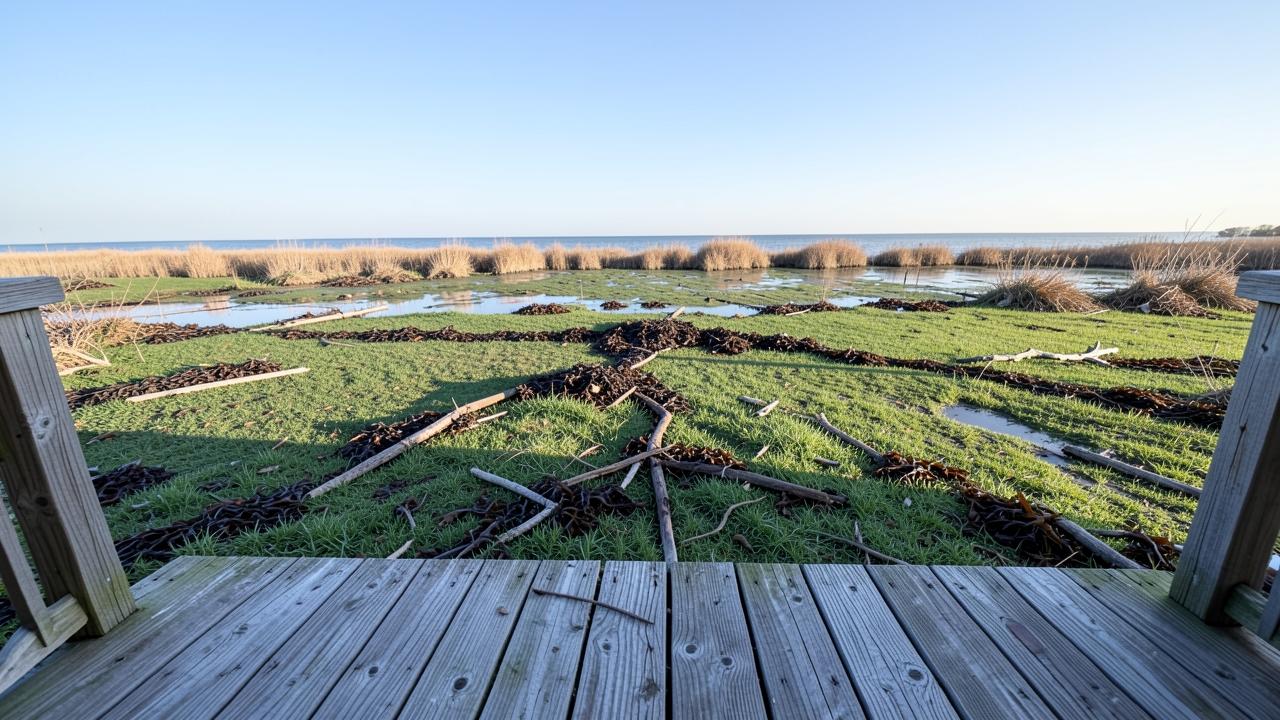 Saltwater Flooding on Your Lawn: Cape Cod Recovery After a Storm TideA storm tide over the lawn is not always a death sentence. Here is what to do in the first days, what to leave alone over winter, and how to judge the damage in spring.
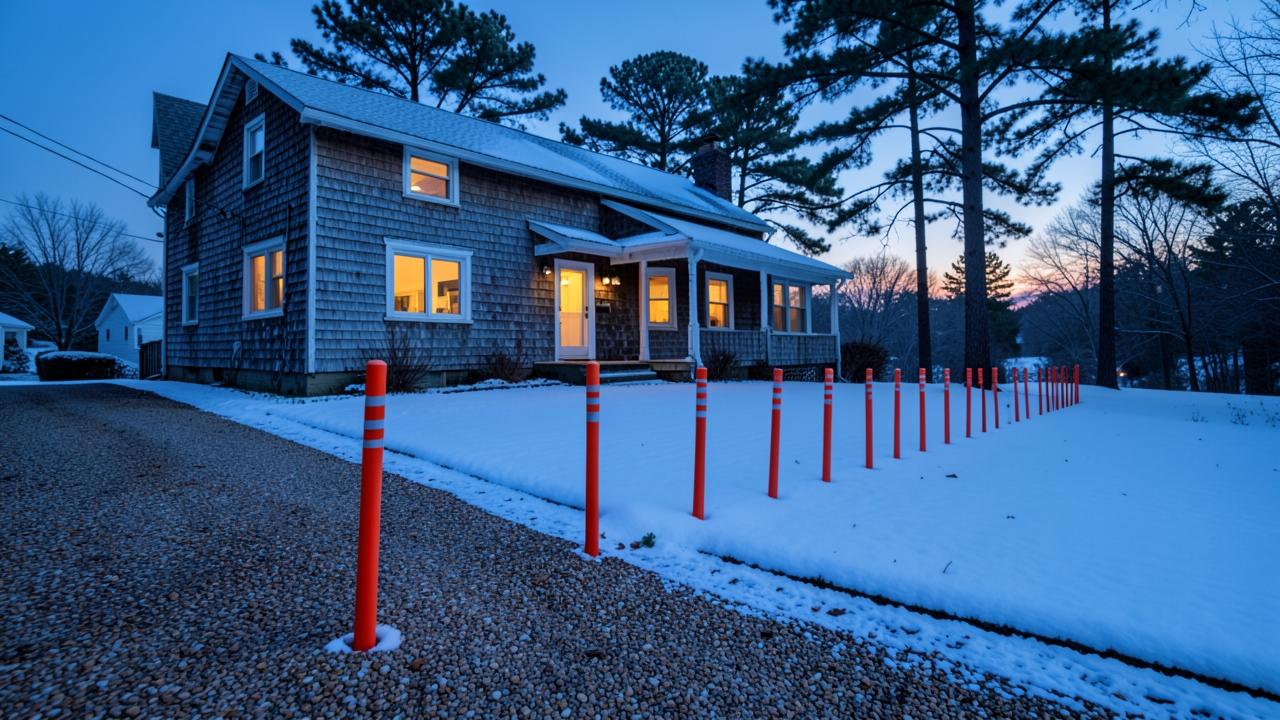 Snow Plow Damage to Lawns: Stake Your Cape Cod Yard Before It FreezesMost plow damage happens because the driver cannot see where the pavement ends. A couple of hours with snow stakes in late November prevents most of it.
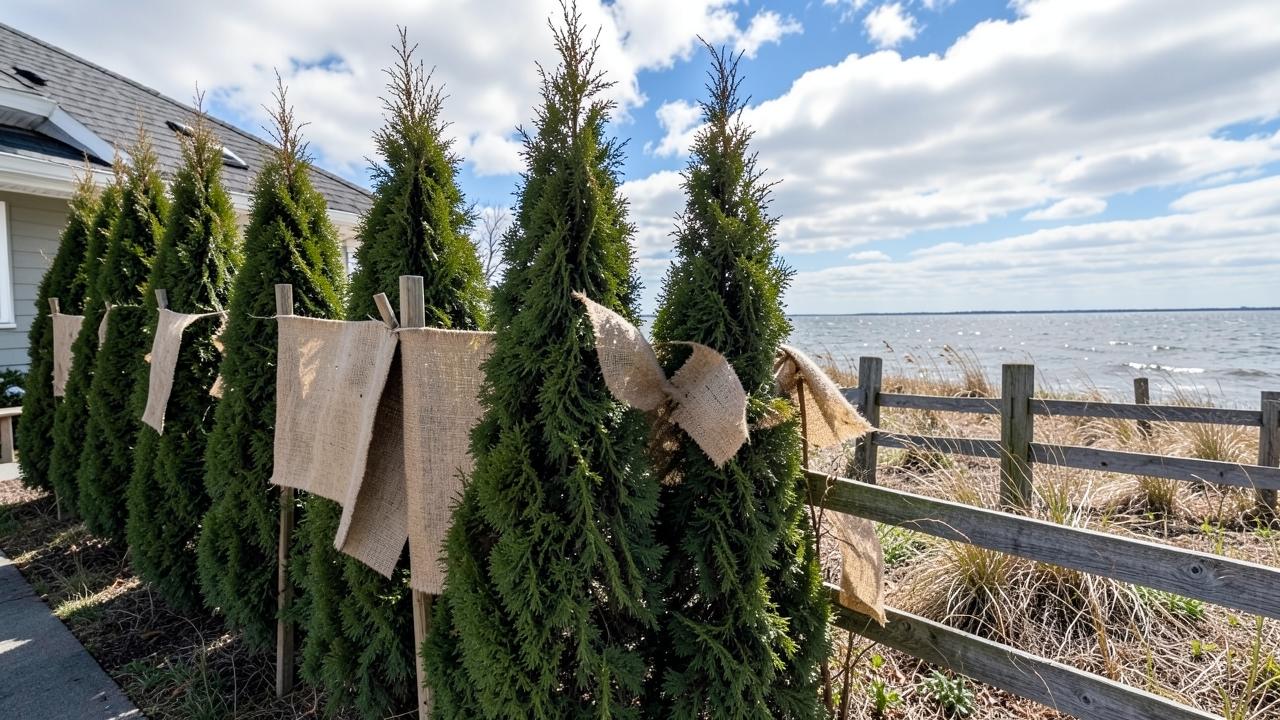 Winter Burn on Evergreens: How to Protect Them on Cape CodBrown arborvitae and boxwood in March usually start with dry soil and wind in November. Here is what to do now on Cape Cod, and what not to bother with.
Want this done on your property?
Free estimates for landscaping, lawn care, and tree work across Cape Cod.