How to Plant a Live Christmas Tree on Cape Cod: Dig the Hole Now
By Nikola Popov, agronomist and founder of Sofkin Landscaping in Hyannis, MA
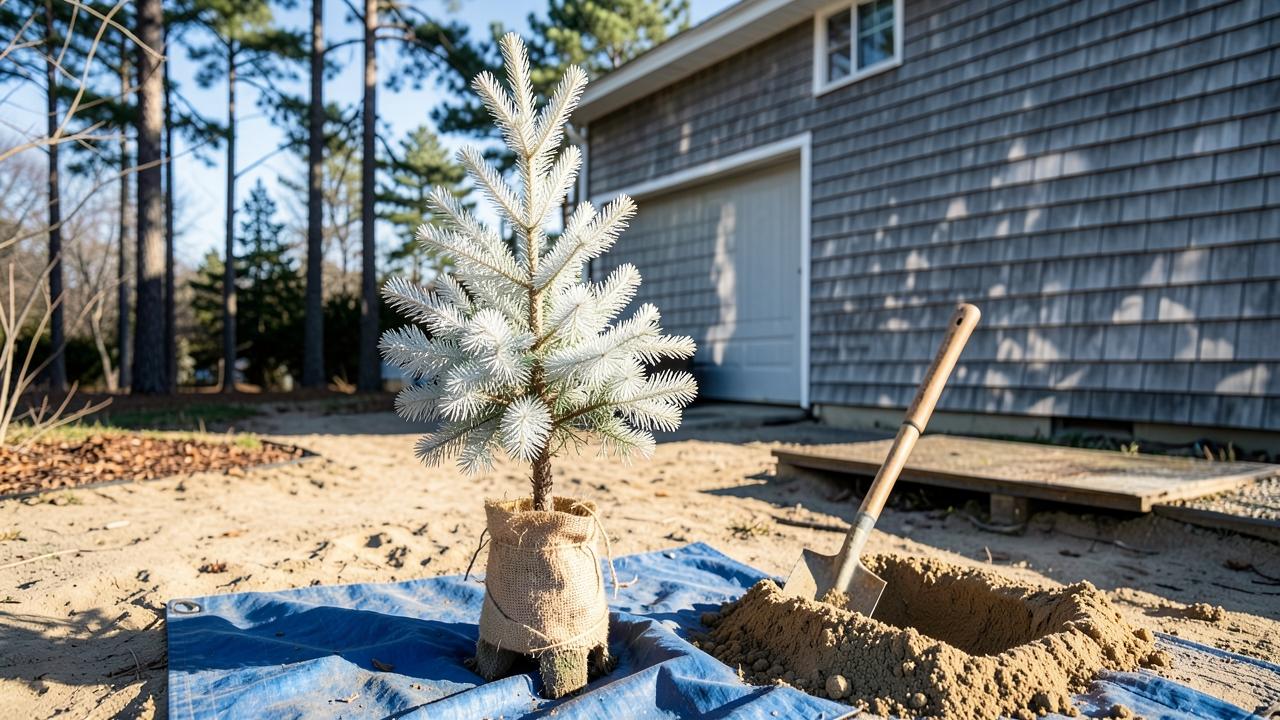
Yes, you can plant a live Christmas tree on Cape Cod and have it thrive, but the work starts in November, not on December 26. Dig the planting hole now, while the ground is still soft, and pick a species that can handle sandy soil and salty wind. Keep the tree indoors for a week at most, and move it gradually from the cold to the warm and back. Many living trees that die in the yard were really lost in the living room: too warm, too long, too dry.
Below is the plan we would follow for our own yard: what to buy, how to stage it through the holidays, how to plant it in January (or hold it until spring), and what to watch the first year.
Pick a species that will actually grow on the Cape
Most Christmas trees sold in pots or burlap were grown for their looks, not for a windy lot half a mile from the bay. Before you shop, decide where the tree will live for the next 30 years. Most popular Christmas tree species reach 30 to 50 feet at maturity, according to UNH Extension, so a cute five-footer by the front step becomes a problem by the time your kids are in college.
UMass Extension's list of trees and shrubs for coastal environments marks two familiar Christmas-tree shapes as salt tolerant: white spruce and eastern red cedar. Both also handle the dry, fast-draining sand most Cape yards sit on. That makes them our first choice for anything exposed to salt spray or open wind.
Firs are a harder sell. NC State Extension does not recommend Fraser fir as a living tree for the landscape, because it transplants poorly and needs the cool, high-elevation conditions it grows in naturally. Colorado blue spruce is widely sold and very hardy, but it often suffers from needle-cast disease in humid summers, which shows up as bare lower branches. Pick one only if you can give it full sun and good air flow.
- White spruce (including the dwarf Alberta type for a tabletop tree): salt tolerant, dense, classic shape.
- Eastern red cedar: native, salt and drought tolerant, looser look; good for a windbreak afterward.
- Norway spruce: fast and tough; give it room, it gets big.
- White pine: soft and native to the region, but not rated salt tolerant, so keep it back from the water.
- Fraser fir and other firs: beautiful indoors, a gamble in the yard.
Dig the hole before the ground freezes
This is the step people skip, and it decides everything. In late December the Cape's sandy topsoil can still be workable, but you cannot count on it, and a cold snap can lock up the top few inches for weeks. Dig in November or early December, while it is easy.
Size the hole to the root ball you are buying. Penn State Extension recommends a hole 1 to 2 feet wider than the root ball, with sloping sides, a firm flat bottom, and a depth equal to the distance from the root flare (where the trunk widens into roots) to the bottom of the ball. On sandy ground the sides tend to cave, so the wider, sloped shape also keeps the hole from collapsing.
Then protect the hole and the soil you took out of it:
- Move the backfill soil into a garage, shed or covered bins so it does not freeze into a solid lump.
- Fill the hole loosely with bagged leaves or straw, or cover it with a tarp weighted at the edges. That keeps frost out and keeps people and pets from stepping in.
- Mark the spot with a stake so it is easy to find under snow.
- Pick a spot in full sun with room for the mature spread, away from overhead wires, the house foundation and the septic leach field.
Buy the right size and plan for the weight
Live trees are heavy. Chicago Botanic Garden notes that a 5-foot balled-and-burlapped tree can weigh up to 200 pounds, which means a hand truck, two people and a ramp, not a roof rack. A 3- to 4-foot tree is much easier to handle and usually establishes faster.
Do not go too small on the roots, though. NC State cites the nursery industry standard that a 5-foot conifer should have a root ball at least 22 inches across; a smaller ball cannot feed the tree's needles through the winter. Press on the ball: it should be firm, the trunk should not wobble in it, and the needles should be flexible, not brittle.
Container trees sold as tabletop decorations are a different case. Many were grown in a greenhouse and may have no winter hardiness at all, so check the tag for a hardiness zone. Most of the Cape is zone 7 on the current USDA map; a tree labeled for zones 3 to 7 is fine, a tree with no zone listed probably is not.
Inside the house: under a week, cool and damp
A dormant evergreen moved into a 70-degree living room starts to think it is spring. Extension guidance ranges from four to five days as ideal to 7 to 10 days at most. We aim for the short end: bring it in a few days before Christmas and take it out soon after.
Stage the move both ways. Keep the tree in an unheated garage, shed or sheltered porch for a week or two before it comes inside, and again for a few days before it goes into the ground. Sudden jumps from freezing to warm and back are what break dormancy and kill buds.
- Set the root ball in a watertight tub on a layer of stones or a board, so it never sits in standing water.
- Check the ball every day. NC State notes a full-size tree can use up to about a gallon of water a day indoors. Ice cubes spread on top of the ball water it slowly.
- Keep it away from heating vents, woodstoves, fireplaces and sunny windows, and turn the thermostat down a few degrees when you can.
- Use LED lights only; they run cool. Skip flocking and spray-on snow.
Planting day in January
After a few days back in the garage, pick a day above freezing. Pull the leaves or tarp out of the hole and bring the stored soil back out.
Find the root flare first; on many field-dug trees it is buried under a few inches of soil on top of the ball. Set the tree so the flare sits level with or slightly above the surrounding ground. Planting too deep is a common reason a new evergreen declines over its first few years, and on our sand it is easy to do because the ball settles.
- Cut away the wire basket and remove the burlap, at least from the top and sides. Synthetic burlap does not rot and should come off completely.
- Backfill with the original soil. Skip heavy amendments; roots should learn to grow into the sand they will live in.
- Water slowly until the backfill is soaked, then add 2 to 3 inches of mulch over the planting area, keeping it a few inches off the trunk.
- On an open or waterfront lot, stake the tree loosely against winter wind, using wide straps rather than wire around the trunk, and remove the stakes after one growing season.
- Do not fertilize. Wait until spring growth starts, and go light on nitrogen the first year.
If the ground is frozen, or you are leaving the Cape
Not every January cooperates. If the hole is frozen or flooded, do not force it. Penn State and UNH both say the tree can wait in an unheated, wind-protected spot such as a garage until spring, with its roots kept moist. UNH actually prefers spring planting for that reason, once the soil has thawed and dried.
This matters for seasonal homes. If you are heading off-Cape after New Year's, someone has to check the root ball every week or two all winter. A tree in a garage with nobody watering it will be brown by March. If that is not realistic, plant it before you leave, even on a cold day, and water it in well; a tree in the ground with mulch over its roots has a better chance than a forgotten ball in a garage.
If the tree ends up outdoors in its pot or burlap until spring, set it out of the prevailing wind, close to the house on the sheltered side, and pile mulch, leaves or straw around and over the root ball so it does not freeze through.
The first year: what to watch
Expect some stress. A tree that spent part of the winter indoors may push weak new growth or drop some inner needles in spring. That is normal. What is not normal is needles turning brown from the tips of whole branches inward, or buds that stay closed into June.
Water is the main job. Sandy Cape soil drains fast, and the original root ball dries out sooner than the soil around it. From spring through fall, give the tree a deep soaking once a week when there is no soaking rain, and check the ball itself with your fingers, not just the surface. Keep mulch pulled back from the trunk so voles cannot hide against the bark; our vole guide explains why.
If deer are regular visitors, keep an eye on the new tree, especially if it is a fir, which deer browse more readily than spruce; the deer protection guide covers cages that work on young trees.
When to call in help
Moving a heavy root ball and setting it at the right depth is a two-person job, and the hole should be dug weeks ahead. If you would rather not wrestle it yourself, our specialty plantings crew handles evergreen planting, and our tree services team can look at the site for wind, salt and space before you buy.
If you want a living tree this year and the hole is not dug yet, ask us for a free estimate soon, while the ground is still open.
Frequently asked questions
How long can a live Christmas tree stay in the house?
Extension services give 4 to 10 days, with Penn State calling four to five days ideal. Less is better. Keep it in the coolest room you have and check the root ball every day.
Can I plant a live Christmas tree in January in Massachusetts?
Yes, if you dug the hole before the ground froze and stored the backfill somewhere it would not freeze. If the ground is frozen solid, keep the tree in an unheated garage with moist roots and plant it in spring.
What is the best live Christmas tree to plant on Cape Cod?
For exposed or coastal yards, white spruce and eastern red cedar, which UMass Extension rates as salt tolerant. Norway spruce works on larger lots set back from the water. Fraser fir is the riskiest choice.
Should I remove the burlap when planting a balled tree?
Remove the wire basket and at least the burlap on the top and sides. If the burlap is synthetic or treated, remove all of it, because it will not break down and can restrict the roots.
Do I need to fertilize a newly planted Christmas tree?
No. Fertilizer at planting time does not help a dormant tree. Wait until new growth appears in spring and use a light hand with nitrogen in the first year.
Related services
More from the blog
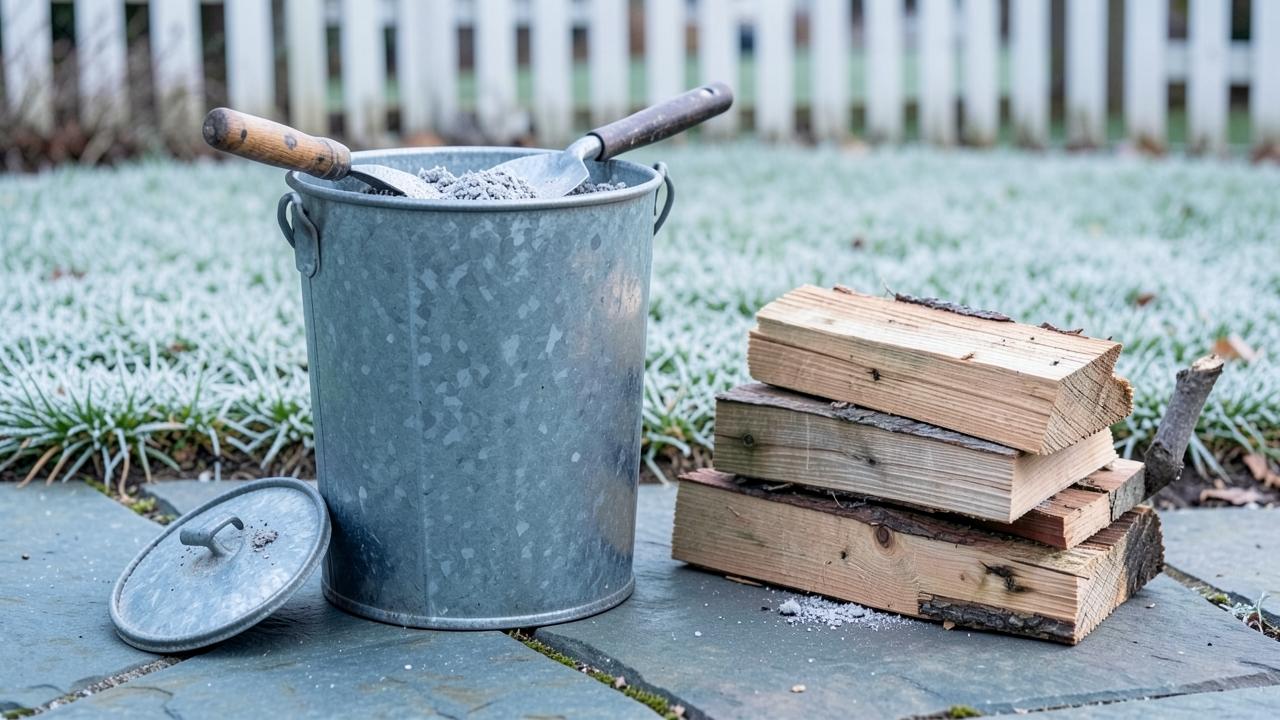 Wood Ash on Your Lawn: A Cape Cod Guide for Fireplace SeasonFireplace ash can help an acidic Cape Cod lawn, but only in small doses, on the right soil and away from acid-loving shrubs. Here is how to tell if yours qualifies.
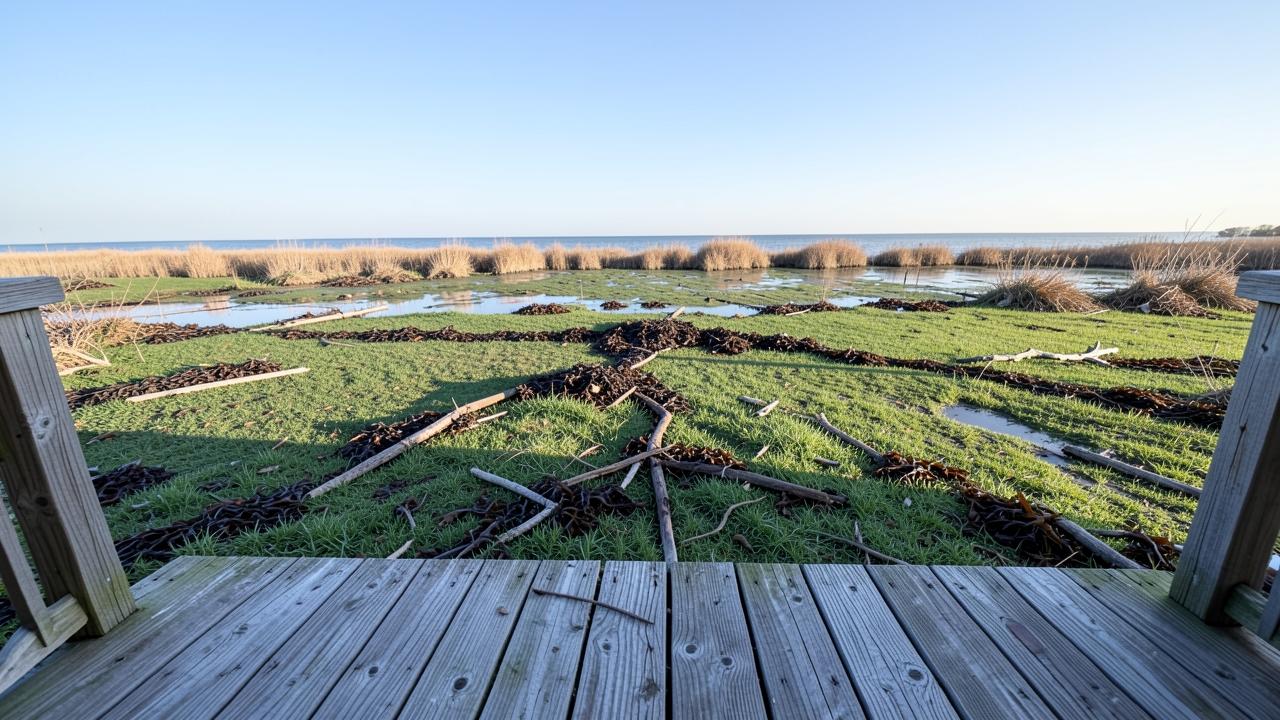 Saltwater Flooding on Your Lawn: Cape Cod Recovery After a Storm TideA storm tide over the lawn is not always a death sentence. Here is what to do in the first days, what to leave alone over winter, and how to judge the damage in spring.
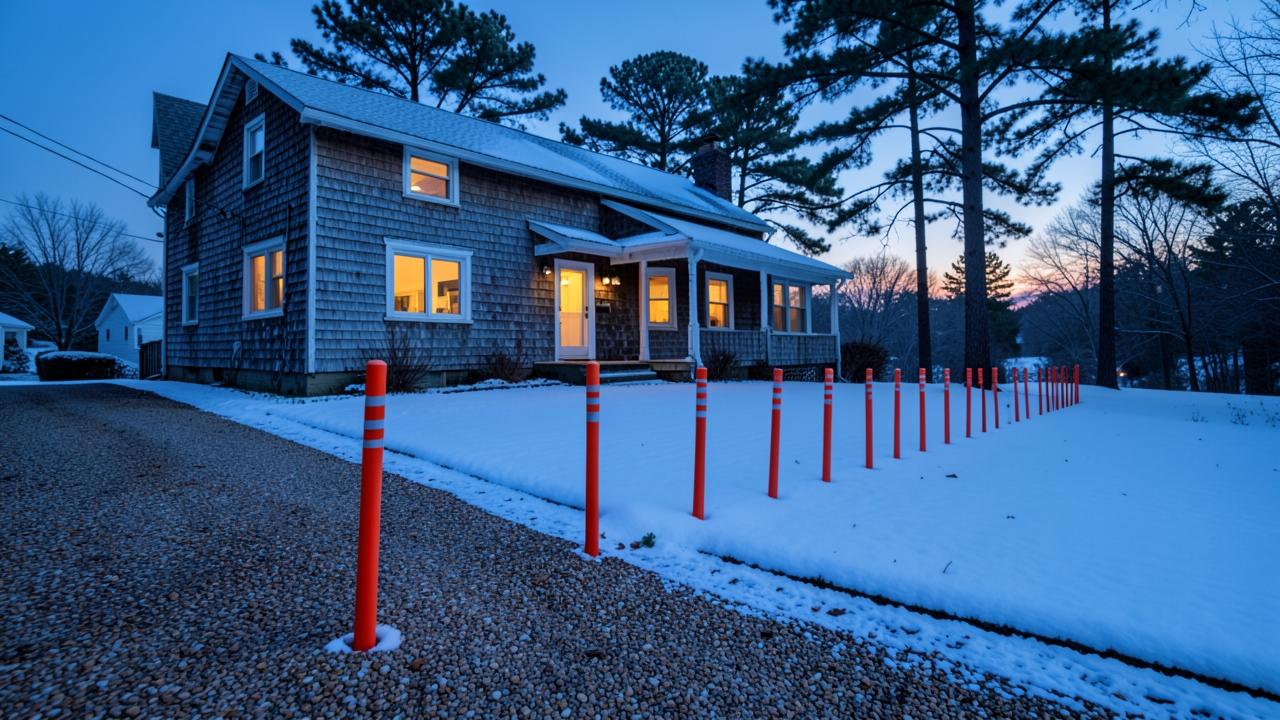 Snow Plow Damage to Lawns: Stake Your Cape Cod Yard Before It FreezesMost plow damage happens because the driver cannot see where the pavement ends. A couple of hours with snow stakes in late November prevents most of it.
Want this done on your property?
Free estimates for landscaping, lawn care, and tree work across Cape Cod.